William Isaac Coppard
William Isaac Coppard was an English clergyman, diarist, and religious writer whose firsthand observations provide an important historical record of one of the nineteenth century's most devastating public health crises. Serving as the incumbent of Plympton St. Mary in Devonshire, Coppard combined pastoral care with careful documentation of the 1832 cholera epidemic. His writings offer a vivid account of the suffering, courage, and community response during a period of widespread fear and uncertainty, making his work valuable to both historians and general readers.
Religious Ministry
William Isaac Coppard devoted his ministry to serving the people of his parish during both ordinary times and moments of extraordinary hardship. As cholera spread across England in 1832, he visited the sick, comforted grieving families, organized practical relief, and worked closely with medical practitioners and local officials. His willingness to remain among those affected demonstrated the pastoral commitment expected of many parish clergy during public health emergencies.
His experiences during the epidemic shaped his most enduring publication, preserving a detailed account of both the physical impact of the disease and the spiritual challenges faced by the community.
Writing Style and Themes
Coppard wrote in a sincere, observant, and deeply compassionate style that blended diary entries with thoughtful reflection. His work explored themes such as faith, duty, resilience, charity, community responsibility, and the realities of epidemic disease. Rather than presenting abstract discussion, he recorded everyday experiences, personal encounters, and practical efforts to care for those in need, creating a narrative that is both historically valuable and emotionally compelling.
This straightforward approach allows modern readers to understand the human dimension of one of the nineteenth century's most significant epidemics.
Contributions to Historical Literature
William Isaac Coppard made an important contribution by preserving a detailed eyewitness account of the cholera outbreak in rural England. His diary offers valuable insight into nineteenth-century medical practices, parish life, public health measures, and the role of clergy during times of crisis. Historians continue to value his observations as an authentic record of how communities responded to epidemic disease before the development of modern medicine and public health systems.
His work remains a significant resource for readers studying social history, religious history, and the evolution of epidemic response.
Enduring Legacy
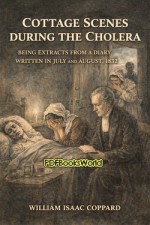
William Isaac Coppard is remembered for preserving an honest and compassionate account of life during the 1832 cholera epidemic. His book Cottage Scenes During the Cholera continues to provide readers with a moving record of faith, perseverance, and community service in the face of widespread suffering. Today, this public domain work remains an important resource for those interested in medical history, social history, public health, religious life, and firsthand accounts of nineteenth-century England.