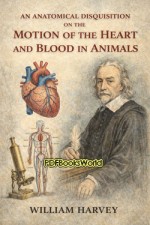
William Harvey
William Harvey was an English physician, anatomist, and pioneering medical scientist whose discovery of the circulation of the blood transformed the study of medicine. Through careful observation, experimentation, and anatomical investigation, Harvey overturned centuries of accepted medical belief and established the heart as the organ responsible for pumping blood throughout the body. His work laid the foundation for modern physiology and remains one of the most important achievements in the history of medical science.
Medical Career
William Harvey studied medicine at the University of Padua, one of Europe's leading medical schools, before returning to England to practice as a physician. He served as a Fellow of the Royal College of Physicians and later became physician to both King James I and King Charles I. Throughout his career, Harvey combined clinical practice with scientific investigation, using direct observation and experimentation to understand the functions of the human body.
His willingness to question long-established medical theories marked a turning point in scientific medicine and encouraged future physicians to rely on evidence rather than tradition.
Writing Style and Scientific Method
Harvey wrote in a precise, logical, and methodical style that carefully documented his observations and experiments. Rather than accepting ancient authorities without question, he supported his conclusions with anatomical demonstrations, repeated experiments, and reasoned argument. His work emphasized observation, measurement, and verification, principles that later became central to the scientific method and modern medical research.
This disciplined approach established a new standard for scientific investigation in medicine and influenced generations of researchers.
Contributions to Medical Science
William Harvey's greatest contribution was demonstrating that blood circulates continuously through the body, propelled by the pumping action of the heart. This revolutionary discovery fundamentally changed the understanding of human anatomy and physiology, replacing theories that had dominated medicine for more than a thousand years. His research also encouraged experimental investigation in biology and inspired future advances in anatomy, surgery, and cardiovascular medicine.
Today, Harvey is recognized as one of the founders of modern physiology, and his discoveries continue to form an essential part of medical education.
Popular Works
- An Anatomical Disquisition on the Motion of the Heart & Blood in Animals – Harvey's landmark work explaining the circulation of the blood and the function of the heart through experimental evidence.
- On the Generation of Animals – A pioneering study of embryology, reproduction, and the development of living organisms.
- Praelectiones Anatomiae Universalis – Harvey's anatomical lecture notes reflecting his teaching and medical observations.
Enduring Legacy
William Harvey is remembered as one of the greatest physicians in history, whose discovery of blood circulation revolutionized medical science. Through careful experimentation, logical reasoning, and unwavering commitment to evidence, he transformed the understanding of the human body and established principles that continue to guide scientific medicine. Today, his public domain works remain essential reading for those interested in anatomy, physiology, medical history, biology, and the origins of modern scientific research.