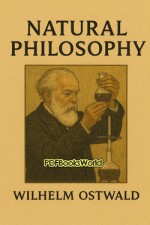
Wilhelm Ostwald
Wilhelm Ostwald was a German chemist, philosopher, educator, and Nobel Prize winner whose pioneering work helped establish modern physical chemistry as a scientific discipline. Awarded the Nobel Prize in Chemistry in 1909, he made significant contributions to chemical kinetics, catalysis, and the study of energy transformations. Beyond the laboratory, Ostwald wrote extensively on philosophy, science, education, and the organization of knowledge, encouraging readers to view science as a unified method for understanding the natural world. His influence extends across chemistry, physics, and the philosophy of science.
Seeking Order in Nature
Ostwald believed that the laws of nature could be understood through careful observation, experimentation, and logical reasoning. His writings explore the relationships between matter, energy, and natural phenomena while emphasizing the importance of scientific thinking in explaining the world around us. Rather than treating scientific disciplines as isolated fields, he viewed them as interconnected branches of a broader search for knowledge. His ideas helped shape modern scientific education and encouraged a deeper appreciation of the principles governing nature.
Science Explained with Clarity
Wilhelm Ostwald wrote in a precise, systematic, and accessible style that makes complex scientific concepts understandable without sacrificing intellectual depth. His logical organization and thoughtful explanations guide readers from fundamental principles to broader philosophical questions, making his works valuable to both students and general readers interested in the foundations of science.
Notable Works
- Natural Philosophy – A thoughtful exploration of the principles underlying the natural sciences.
- Outlines of General Chemistry – An influential textbook introducing the fundamentals of chemistry.
- The School of Chemistry – A practical guide to chemical methods and laboratory instruction.
- Conversations on Chemistry – Discussions designed to make chemistry accessible to learners.
- The Color Primer – A study of color theory and its scientific and artistic applications.
A Scientific Classic in Our Library
Natural Philosophy examines the fundamental ideas that underlie the study of the physical world, exploring concepts such as matter, energy, force, motion, and the scientific method. Ostwald explains how observation, experimentation, and logical reasoning enable humanity to uncover the laws governing natural phenomena. Blending scientific insight with philosophical reflection, the book encourages readers to view science as a coherent and evolving pursuit of knowledge. It remains an engaging introduction to the principles that form the foundation of modern scientific thought.
An Enduring Legacy in Science
Wilhelm Ostwald is remembered as one of the founders of modern physical chemistry and a leading advocate for scientific education and rational inquiry. His groundbreaking research and thoughtful writings continue to influence scientists, educators, and students around the world. PDF Books World has carefully curated digital editions of his enduring works, allowing modern readers to explore the lasting ideas and scientific vision of one of the great pioneers of modern chemistry.