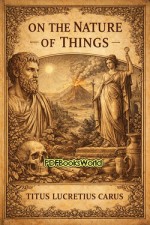
Titus Lucretius Carus
Titus Lucretius Carus, commonly known as Lucretius, was a Roman poet and philosopher whose writings preserved the teachings of the Greek philosopher Epicurus for future generations. Living during the first century BCE, he sought to explain the natural world through reason and observation rather than superstition or fear. His only surviving work combines poetry with philosophy, presenting complex scientific and ethical ideas in elegant verse. Through his remarkable literary achievement, Lucretius became one of the most influential voices in the history of classical thought.
Exploring the Universe Through Reason
Lucretius believed that understanding nature frees humanity from unnecessary fear and encourages a life guided by knowledge and tranquility. His philosophy examines the structure of the universe, the nature of matter, the origins of life, and the workings of the human mind, presenting an early vision of a world governed by natural laws. While many of its scientific ideas reflect the knowledge of the ancient world, the work remains significant for its commitment to rational inquiry and intellectual curiosity.
Philosophy Expressed in Epic Poetry
Titus Lucretius Carus wrote in a graceful, imaginative, and highly poetic style that transforms philosophical discussion into compelling literature. Through vivid imagery, memorable comparisons, and carefully crafted verse, he makes abstract concepts both engaging and accessible. His ability to unite scientific speculation with artistic expression has ensured the lasting admiration of scholars, philosophers, and lovers of classical poetry.
Books Worth Reading
Titus Lucretius Carus is known today for only one surviving masterpiece, On the Nature of Things. It is regarded as one of the greatest philosophical poems of the ancient world and a landmark of Latin literature.
A Classical Masterpiece in Our Library
On the Nature of Things is a six-book philosophical poem that presents the principles of Epicurean philosophy while exploring the origins of the universe, the nature of matter, the human soul, sensation, and the workings of the natural world. Written to encourage rational thought and freedom from fear, the poem argues that understanding nature leads to a more peaceful and meaningful life. Blending poetic beauty with philosophical depth, it remains an extraordinary achievement that continues to inspire readers interested in science, philosophy, literature, and the history of ideas.
An Enduring Legacy of Classical Thought
Titus Lucretius Carus is remembered as one of Rome's greatest poets and philosophical writers, whose work preserved ancient ideas that profoundly influenced Renaissance scholarship, modern science, and Western philosophy. His timeless masterpiece continues to be studied for both its literary excellence and its intellectual ambition. PDF Books World has carefully curated a digital edition of this enduring classic, allowing modern readers to experience one of the finest achievements of classical literature and philosophical poetry.