
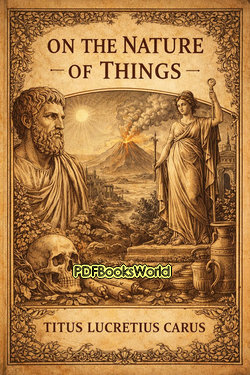
On the Nature of Things
by Titus Lucretius Carus
A Revolutionary Philosophical Poem About Nature, Science, and Human Existence
On the Nature of Things by Lucretius is one of the greatest philosophical poems of the ancient world. Written in the first century BCE, the work presents the ideas of Epicurean philosophy while exploring the nature of the universe, matter, life, death, and human happiness.
The poem combines scientific curiosity, philosophical reasoning, and poetic imagination to explain how the world functions according to natural laws rather than divine fear or superstition. Through its bold ideas and literary beauty, the work became highly influential in the development of Epicurean philosophy and scientific thought.
About the Author
Lucretius was a Roman poet and philosopher known primarily for this monumental work. Although little is known about his personal life, his poem became one of the most important surviving texts of classical philosophy.
His goal was to explain the teachings of the Greek philosopher Epicurus while freeing people from fear, superstition, and anxiety about death.
Main Themes of the Poem
The poem examines the structure of the universe and the principles governing nature while encouraging rational understanding and peaceful living.
Important Themes Discussed
- The atomic nature of matter
- Life, death, and mortality
- Reason versus superstition
- Human happiness and tranquility
Lucretius argues that understanding nature through reason can reduce fear and help people live more balanced and fulfilling lives.
The Universe According to Lucretius
The poem explains that everything in existence is made of tiny particles moving through space. According to Lucretius, natural events occur because of physical processes rather than supernatural intervention.
He also discusses human emotions, dreams, love, society, and the origins of civilization while emphasizing the importance of knowledge and intellectual freedom.
What Makes the Work Unique
- Blend of poetry, philosophy, and early science
- Natural explanation of the universe and human life
- Powerful criticism of fear and superstition
Writing Style
Lucretius’s writing style is poetic, intellectual, and vividly descriptive. He transforms philosophical and scientific ideas into emotionally rich and imaginative verse.
The combination of logical argument and literary beauty gives the work lasting emotional and intellectual power.
Historical Importance
On the Nature of Things became one of the foundational works in the history of classical philosophy and early scientific materialism. Rediscovered during the Renaissance, the poem influenced philosophers, scientists, and writers across Europe.
Historical Features
- Preservation of Epicurean philosophical ideas
- Influence on scientific and rational thought
- Major contribution to philosophical poetry
The work also helped encourage intellectual curiosity and skepticism during periods of cultural and scientific change.
Lessons for Modern Readers
Modern readers continue to study the poem because its discussions about nature, fear, mortality, and human happiness remain deeply meaningful today.
The work encourages rational inquiry, emotional balance, and appreciation for the natural world and human experience.
Conclusion
On the Nature of Things by Lucretius remains a timeless masterpiece of philosophy and poetry. Through imaginative language and bold intellectual vision, Lucretius created a profound exploration of the universe, human life, and the search for wisdom and peace.
Similar Genres
About the Author
Titus Lucretius Carus, commonly known as Lucretius, was a Roman poet and philosopher whose writings preserved the teachings of the Greek philosopher Epicurus for future generations. Living during the first century BCE, he sought to explain the natural world through reason and observation rather than superstition or fear. Explore Titus Lucretius Carus books to discover the author's life, literary career, and access notable works.