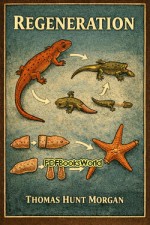
Thomas Hunt Morgan
Thomas Hunt Morgan was an American biologist, geneticist, and experimental scientist whose groundbreaking research transformed the study of heredity and modern biology. Through years of careful observation and laboratory investigation, he demonstrated how genes are carried on chromosomes, laying the foundation for the science of genetics. His discoveries earned him the Nobel Prize in Physiology or Medicine and influenced generations of scientists around the world. Morgan believed that scientific progress depended on careful experimentation, evidence, and a willingness to question existing ideas. His books and research continue to inspire students, educators, and researchers interested in biology and the natural sciences.
A Pioneer of Modern Genetics
Thomas Hunt Morgan began his scientific career studying zoology and embryology before turning his attention to genetics, a field that was still in its early stages. His experiments with the common fruit fly, Drosophila melanogaster, revealed how inherited traits are passed from one generation to the next. These studies provided convincing evidence that genes are located on chromosomes, fundamentally changing the understanding of heredity. Morgan's research became one of the cornerstones of modern biology and opened new directions for scientific investigation into evolution, medicine, and agriculture.
Careful Observation and Experimental Science
One of Morgan's greatest strengths was his commitment to scientific method. Rather than relying on speculation, he designed carefully controlled experiments and drew conclusions only after examining the evidence. His approach encouraged researchers to test theories through observation and repeatable experiments. This dedication to accuracy helped establish genetics as a rigorous scientific discipline and demonstrated the importance of evidence-based research in understanding living organisms. His work continues to serve as a model for scientific inquiry across many branches of biology.
Contributions Beyond Genetics
Although Morgan is best known for his pioneering work in genetics, his interests extended to embryology, evolution, regeneration, and developmental biology. He explored how organisms grow, repair damaged tissues, and develop from simple beginnings into complex forms. His ability to connect different areas of biology gave readers and researchers a broader understanding of life's underlying processes. Through his teaching and publications, Morgan also mentored many young scientists who later made significant contributions of their own, extending his influence far beyond his own discoveries.
Books Worth Exploring
- Regeneration – A scientific study of how living organisms repair and replace damaged tissues.
- The Mechanism of Mendelian Heredity – A landmark work explaining the principles of genetics.
- Evolution and Adaptation – An examination of evolutionary theory and biological change.
- Experimental Zoology – A comprehensive introduction to experimental methods in biological research.
- The Theory of the Gene – An influential work describing the role of genes in heredity.
An Enduring Scientific Legacy
Thomas Hunt Morgan's discoveries reshaped the understanding of heredity and helped establish genetics as one of the most important fields in modern science. His dedication to careful experimentation, logical reasoning, and scientific integrity continues to inspire researchers around the world. From genetics and developmental biology to medicine and agriculture, his influence can still be seen in countless areas of scientific research. His writings remain valuable for readers seeking to understand the history and development of modern biological science.
Readers interested in genetics, biology, evolution, and the history of scientific discovery can explore the works of Thomas Hunt Morgan at PDF Books World and discover the enduring contributions of a Nobel Prize-winning scientist whose research transformed our understanding of life itself.