Thomas Aquinas
Thomas Aquinas was an Italian philosopher, theologian, scholar, and one of the most influential thinkers in the history of Western intellectual tradition. His writings brought together Christian theology and classical philosophy, especially the ideas of Aristotle, creating a systematic framework that shaped religious, philosophical, and ethical thought for centuries. Aquinas believed that faith and reason complement one another and that careful study of the natural world, human nature, and divine revelation could lead to a deeper understanding of truth. His works continue to be studied in universities, seminaries, and philosophical institutions around the world.
Uniting Faith and Reason
Aquinas sought to demonstrate that rational inquiry and religious belief need not be in conflict. He argued that human reason is a valuable gift that allows people to investigate the world while divine revelation provides truths beyond the reach of reason alone. By carefully examining philosophical arguments alongside theological teachings, he created a balanced approach that influenced philosophy, ethics, law, and theology for generations.
His method of presenting questions, considering opposing viewpoints, and then offering carefully reasoned conclusions became a model for scholarly discussion. This systematic style encouraged thoughtful debate and disciplined intellectual inquiry.
A Scholar with Lasting Influence
Throughout his career, Aquinas wrote on theology, metaphysics, ethics, politics, and natural law. His ideas shaped medieval scholarship and continue to influence modern discussions of morality, justice, education, and philosophy. His writings reflect an extraordinary commitment to logical reasoning, careful analysis, and the pursuit of wisdom, making them enduring landmarks in the history of human thought.
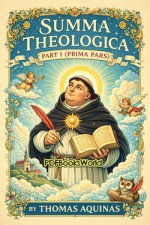
Among his greatest achievements is Summa Theologica, Part I (Prima Pars), the opening section of his monumental theological work, which examines the nature of God, creation, angels, and the human person. The work reflects his lifelong effort to present theology in a clear, organized, and systematic form.
Major Works
- Summa Theologica – A comprehensive exposition of Christian theology, philosophy, ethics, and doctrine arranged through systematic questions and answers.
- Summa contra Gentiles – Presents philosophical and theological arguments explaining and defending Christian beliefs.
- Commentary on Aristotle's Metaphysics – Explores Aristotle's philosophical ideas and their significance for medieval thought.
- Commentary on the Nicomachean Ethics – Examines virtue, happiness, and moral philosophy through Aristotle's ethical teachings.
- On Being and Essence – Discusses the philosophical concepts of existence, essence, and the nature of reality.
An Enduring Legacy of Scholarship
Thomas Aquinas remains one of history's most influential philosophers and theologians. His ability to combine rigorous reasoning with profound theological reflection established a tradition of scholarship that continues to shape philosophy, ethics, law, and religious studies. His writings encourage readers to pursue truth through thoughtful inquiry, intellectual discipline, and an enduring respect for both reason and faith.
Readers visiting PDF Books World can explore the works of Thomas Aquinas and discover timeless writings that continue to inspire thoughtful reflection on philosophy, theology, ethics, and the pursuit of knowledge.