Theodore Foster
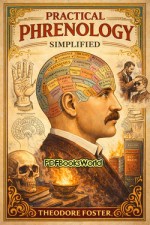
Theodore Foster was an American writer and lecturer who became known for presenting popular educational subjects in a clear and practical manner. His works reflected the nineteenth-century interest in understanding human behavior, personality, and self-improvement through scientific and philosophical ideas that were widely discussed during the period. Foster aimed to make complex topics accessible to ordinary readers by using straightforward explanations and practical examples. His book Practical Phrenology Simplified introduced readers to the principles of phrenology as they were understood in his time, making the subject easier for beginners to study and discuss.
Making Complex Ideas Accessible
One of Theodore Foster's greatest strengths was his ability to explain challenging subjects in simple language. Rather than writing only for specialists, he produced works intended for general readers who wished to expand their knowledge. His clear organization and practical approach allowed readers to explore unfamiliar concepts without becoming overwhelmed by technical details. This educational style helped broaden public interest in subjects that were widely debated during the nineteenth century.
Writing in Historical Context
Foster wrote during an era when phrenology attracted considerable public attention and was often presented as a method for understanding personality and mental abilities. Although phrenology has since been thoroughly discredited as a scientific discipline and is no longer accepted by modern neuroscience or psychology, it played an important role in the history of ideas about the human mind. Today, Foster's work is valued primarily as a historical document that illustrates how people of his time sought to explain human behavior and character.
Notable Works
- Practical Phrenology Simplified – An introductory guide explaining the principles of phrenology as they were understood during the nineteenth century.
- The Illustrated Self-Instructor in Phrenology and Physiology – Combines discussions of phrenology and basic physiology for readers interested in popular educational subjects of the period.
An Enduring Historical Legacy
Although Theodore Foster's writings are closely associated with ideas that have since been rejected by modern science, they remain valuable for understanding the intellectual and cultural history of the nineteenth century. His books reflect the curiosity of an age that sought new ways to study the human mind and behavior through observation and classification. Today, historians and readers interested in the history of science continue to examine his works as examples of popular educational literature from an earlier era. Visitors to PDF Books World can explore Foster's public domain writings to gain insight into the development of historical scientific thought and the changing understanding of human nature over time.