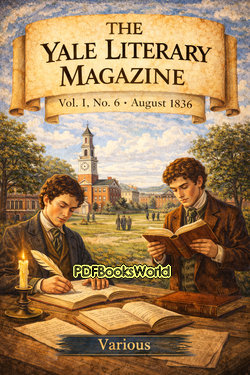
The Yale Literary Magazine (Vol. I, No. 6, August 1836)
by Students of Yale
Exploring the Ideas, Literature, and Aspirations of Early Yale Scholars
The Yale Literary Magazine (Vol. I, No. 6, August 1836) by Various represents another noteworthy installment in the first year of one of America's oldest collegiate literary publications. This issue continues the magazine's mission of encouraging intellectual inquiry, creative expression, and literary achievement among Yale students. Through essays, poetry, criticism, and reflections, the publication captures the thoughts and interests of young scholars during a dynamic period in American history.
Published only a few decades after the founding of the United States, the magazine reflects a society eager to develop its own literary and intellectual identity. The contributors demonstrate a strong appreciation for education, moral reflection, and artistic creativity, producing a collection that remains both historically valuable and intellectually engaging.
The Purpose of the Yale Literary Magazine
When the Yale Literary Magazine was established in 1836, its goal was to provide students with a platform for thoughtful writing and discussion. The publication encouraged contributors to develop their skills as writers while engaging with important subjects beyond their formal academic studies.
This issue reflects that ambition. Readers encounter works that address philosophical questions, social observations, historical themes, and literary topics. The magazine served as both a creative outlet and an intellectual forum, helping students refine their ideas and share them with a wider audience.
A Blend of Scholarship and Creativity
One of the strengths of the publication is its ability to combine serious scholarship with imaginative writing. Essays encourage readers to think critically about human behavior, society, and knowledge, while poems and literary sketches provide opportunities for emotional expression and artistic exploration.
This balance reflects the educational ideals of the period, which emphasized not only intellectual achievement but also the cultivation of character, taste, and creativity. The result is a publication that appeals to readers interested in both ideas and literature.
Notable Features of the Issue
- Reflective Essays: Discussions of philosophy, ethics, and human experience.
- Poetry: Creative works inspired by nature, memory, ambition, and emotion.
- Literary Commentary: Evaluations of authors and important writings.
- Historical Perspectives: Consideration of past events and their lessons.
- Student Voices: Original contributions that reveal the concerns of young scholars.
The Influence of Nineteenth-Century Education
The contributors to the magazine were shaped by a rigorous educational system that emphasized classical literature, rhetoric, history, philosophy, and moral reasoning. These influences are evident throughout the issue. Writers frequently draw upon historical examples, classical references, and philosophical arguments to support their ideas.
Such content provides modern readers with insight into the intellectual environment of American colleges during the early nineteenth century. It also highlights the importance that educational institutions placed on clear thinking and effective communication.
The Role of Poetry in Student Life
Poetry occupies an important place within the magazine. The poems included in the issue explore personal emotions, aspirations, and reflections on the natural world. Influenced by Romantic literary traditions, many contributors sought to express both imagination and feeling through carefully crafted verse.
These works demonstrate that literary creativity was highly valued alongside academic accomplishment. For many students, poetry offered a way to explore ideas and experiences that could not easily be addressed through formal essays alone.
Major Themes Throughout the Magazine
- Knowledge: The pursuit of learning as a lifelong endeavor.
- Character: The importance of integrity, discipline, and moral responsibility.
- Creativity: Literature and poetry as essential forms of expression.
- Reflection: Thoughtful examination of life and society.
- Ambition: The desire for personal improvement and meaningful achievement.
A Snapshot of Early American Intellectual Culture
Beyond its literary content, the issue serves as a valuable historical document. It preserves the perspectives of educated young Americans at a time when the nation was still defining its cultural and intellectual identity. Readers gain insight into the interests, concerns, and aspirations of students who would go on to participate in many aspects of American society.
The magazine also demonstrates the role of student publications in fostering discussion, creativity, and intellectual growth. These goals remain relevant in educational institutions today.
Why This Issue Remains Worth Reading
The Yale Literary Magazine (Vol. I, No. 6, August 1836) continues to be of interest because it captures a unique moment in the history of American education and literature. Its essays, poems, and reflections provide a rich portrait of collegiate life while preserving the voices of young writers seeking to understand their world.
For readers interested in literary history, nineteenth-century culture, student writing, or the development of American intellectual life, this issue offers a rewarding and informative experience. It stands as a testament to the enduring value of curiosity, creativity, and thoughtful expression in the pursuit of knowledge.
Similar Genres
About the Author
Students of Yale refers to the collective authorship of Yale University students who produced a variety of literary, historical, humorous, and commemorative works reflecting campus life, academic traditions, and student experiences. Explore Students of Yale books to discover the author's life, literary career, and access notable works, including The Yale Literary Magazine (Vol. I, No. 4, June 1836), The Yale Literary Magazine (Vol. I, No. 5, July 1836), The Yale Literary Magazine (Vol. I, No. 3, April 1836) , and more.