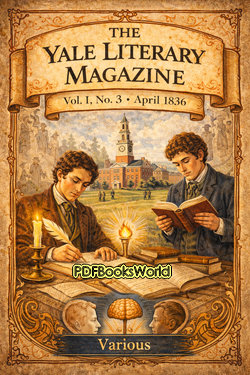
The Yale Literary Magazine (Vol. I, No. 3, April 1836)
by Students of Yale
The Early Voices of Yale's Literary Tradition
The Yale Literary Magazine (Vol. I, No. 3, April 1836) by Various offers a fascinating glimpse into the intellectual and creative life of Yale students during the early nineteenth century. Published only months after the magazine's founding, this issue reflects the enthusiasm of young writers eager to participate in America's growing literary culture. Through essays, poetry, commentary, and reflections, the magazine showcases the interests, ambitions, and talents of a generation seeking both knowledge and self-expression.
At a time when the United States was still developing its cultural identity, college literary magazines served as important forums for discussion and creativity. They provided students with opportunities to share ideas, refine their writing skills, and engage with the major intellectual questions of their era. This issue of the Yale Literary Magazine stands as an excellent example of that tradition.
A New Literary Venture
The Yale Literary Magazine was established in 1836 with the goal of encouraging original writing among students and fostering an appreciation for literature and scholarship. As one of the earliest collegiate literary publications in the nation, it quickly became an important part of campus life.
The April issue demonstrates the confidence and ambition of its contributors. The writers address a variety of topics ranging from philosophy and history to poetry and personal reflection. Their work reveals a strong commitment to intellectual growth and thoughtful discussion.
A Collection of Diverse Contributions
One of the magazine's greatest strengths is the diversity of its content. Rather than concentrating on a single subject, the publication presents a mixture of literary forms that appeal to a wide range of readers. Essays encourage careful thought, while poems provide opportunities for emotional and artistic expression.
This variety reflects the educational ideals of the period, which emphasized the development of both reason and imagination. Students were encouraged not only to acquire knowledge but also to cultivate creativity and effective communication.
Highlights of the Issue
- Philosophical Essays: Discussions of ideas related to truth, character, and human nature.
- Poetry: Original verses exploring emotion, beauty, and personal reflection.
- Historical Commentary: Consideration of past events and their significance.
- Literary Analysis: Observations about important authors and works.
- Student Perspectives: Unique viewpoints on contemporary intellectual topics.
The Influence of Classical Learning
The contributors to the magazine were educated in a curriculum strongly influenced by classical literature, ancient history, philosophy, and rhetoric. As a result, many of the writings reveal familiarity with Greek and Roman traditions as well as English literary classics.
References to historical figures, moral philosophy, and literary themes appear throughout the issue. These influences helped shape the style and substance of the contributions, creating a publication that reflects the educational priorities of the era.
Poetry and Imagination
Poetry plays a significant role in the magazine. The poems featured in the issue demonstrate the influence of Romantic literature, which emphasized emotion, imagination, nature, and individual experience. Through verse, student writers explore personal feelings and universal themes while experimenting with language and form.
These creative works balance the more analytical essays and contribute to the publication's overall richness. They reveal the desire of young writers to engage not only with ideas but also with the emotional and artistic dimensions of life.
Major Themes Throughout the Magazine
- Education: Learning as a pathway to personal and intellectual growth.
- Character: The importance of moral responsibility and integrity.
- Literature: Appreciation for reading, writing, and artistic achievement.
- Reflection: Thoughtful examination of human experience.
- Ambition: The pursuit of knowledge, success, and self-improvement.
A Snapshot of Student Life in 1836
Beyond its literary value, the magazine provides insight into the concerns and aspirations of college students nearly two centuries ago. Readers can observe how young scholars approached questions of morality, society, and culture while preparing for lives of leadership and public service.
The publication reflects a period when education was closely linked to personal development and civic responsibility. These values are evident throughout the issue and help explain the seriousness with which contributors approached their writing.
Why This Issue Still Matters
The Yale Literary Magazine (Vol. I, No. 3, April 1836) remains a valuable historical and literary document. It preserves the voices of students who participated in the early development of American intellectual culture and demonstrates the role of collegiate publications in fostering creativity and scholarship.
For readers interested in literary history, higher education, nineteenth-century America, or the evolution of student writing, this issue offers a rewarding glimpse into a formative period of American cultural life. Its essays and poems continue to illustrate the enduring importance of curiosity, imagination, and thoughtful expression.
Similar Genres
About the Author
Students of Yale refers to the collective authorship of Yale University students who produced a variety of literary, historical, humorous, and commemorative works reflecting campus life, academic traditions, and student experiences. Explore Students of Yale books to discover the author's life, literary career, and access notable works, including The Yale Literary Magazine (Vol. I, No. 4, June 1836), The Yale Literary Magazine (Vol. I, No. 5, July 1836), The Yale Literary Magazine (Vol. I, No. 6, August 1836) , and more.