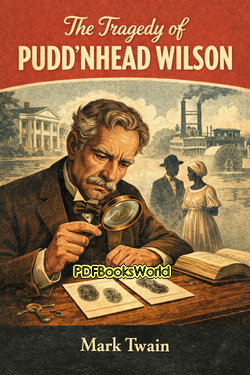
The Tragedy of Pudd'nhead Wilson
by Mark Twain
Mistaken Identities, Hidden Truths, and Small-Town Secrets in The Tragedy of Pudd'nhead Wilson
What happens when a single decision changes several lives forever? That question lies at the center of The Tragedy of Pudd'nhead Wilson, one of the most thought-provoking novels written by Mark Twain. Filled with courtroom drama, satire, mystery, and social criticism, the novel explores race, identity, and justice in a small American town along the Mississippi River.
Unlike some of Twain’s lighter adventures, this novel takes a darker and more serious approach. Through clever storytelling and unforgettable characters, the author examines how society judges people based on appearance, class, and background.
A Story Built on One Dangerous Secret
The novel begins in the quiet town of Dawson’s Landing, Missouri. A slave woman named Roxana makes a desperate choice to protect her child from a harsh future. Because her son looks almost identical to his white master’s baby, she secretly switches the two infants.
As the children grow older:
- The real heir grows up as a servant
- Roxana’s son is raised as a wealthy gentleman
- No one suspects the truth behind the exchange
This hidden secret becomes more dangerous over time, leading to lies, crime, and eventually tragedy.
Who Is Pudd'nhead Wilson?
The title character, David Wilson, is a lawyer and intellectual who moves to Dawson’s Landing hoping to build a successful career. Early in the story, a misunderstood joke causes townspeople to think he is foolish, earning him the nickname “Pudd'nhead.”
Although the town dismisses him, Wilson quietly studies fingerprints and human behavior. Over time, his intelligence and careful observations become essential to solving the novel’s central mystery.
Wilson stands out because he relies on:
- Logic and science
- Observation
- Patience
- Independent thinking
His role becomes increasingly important as the story moves toward its dramatic conclusion.
The Novel’s Major Themes
Race and Social Inequality
One of the strongest themes in the novel is racial identity in 19th-century America. Twain challenges the idea that race defines a person’s value or character.
The switched children grow up in completely different social positions even though their appearances are nearly identical. Through this situation, Twain questions the fairness and logic of racial divisions.
Identity and Human Nature
The novel repeatedly asks whether people are shaped more by birth or by environment. The switched identities create a powerful experiment that drives much of the story.
Readers are encouraged to think about:
- The influence of upbringing
- Social expectations
- The difference between appearance and reality
- The consequences of deception
Justice and Truth
As the novel develops, truth slowly rises to the surface. The courtroom scenes highlight the importance of evidence, reason, and fairness.
Twain’s use of fingerprint science was especially interesting for readers at the time because fingerprinting was still relatively new in criminal investigations.
Why the Novel Stands Out
The Tragedy of Pudd'nhead Wilson combines several literary styles in one story. It includes satire, suspense, social commentary, and psychological drama.
The book remains memorable because of its:
- Unexpected plot twists
- Sharp criticism of society
- Dark humor
- Strong moral questions
- Complex characters
Mark Twain uses humor in some scenes, but the overall tone is more serious than novels like The Adventures of Tom Sawyer or Adventures of Huckleberry Finn.
Important Characters
Roxana
Roxana is one of the novel’s most emotionally powerful characters. Her fear, love, and desperation drive the story’s central decision.
Tom Driscoll
The child raised as a wealthy heir becomes selfish, reckless, and dishonest as he grows older. His actions create increasing tension throughout the novel.
David Wilson
Pudd'nhead Wilson serves as the novel’s voice of reason. Though underestimated by the townspeople, he ultimately uncovers the truth.
Mark Twain’s Writing Style
Mark Twain was famous for blending humor with serious social criticism. In this novel, he uses simple language, realistic dialogue, and vivid descriptions of small-town life.
The story also reflects Twain’s ability to expose social hypocrisy while keeping readers engaged through suspense and character drama.
His writing often includes:
- Regional dialects
- Satirical humor
- Moral questions
- Realistic characters
- Sharp observations about society
Lasting Importance of the Novel
Even today, The Tragedy of Pudd'nhead Wilson continues to be studied for its exploration of race, justice, and identity. Many readers consider it one of Twain’s most intelligent and daring works.
The novel remains important because it addresses social issues that still feel relevant in modern discussions about equality and human rights.
Final Thoughts
The Tragedy of Pudd'nhead Wilson by Mark Twain is a compelling novel that blends mystery, satire, and social criticism into a deeply memorable story. Through switched identities, courtroom drama, and hidden truths, Twain examines the flaws of society while keeping readers fully engaged.
For readers interested in classic American literature, moral dilemmas, and powerful storytelling, this novel offers both entertainment and thoughtful reflection long after the final page.
Similar Genres
About the Author

Mark Twain, the pen name of Samuel Langhorne Clemens, remains one of America's most beloved authors and humorists. Born in Missouri in 1835, he drew inspiration from his experiences along the Mississippi River, transforming everyday life into unforgettable stories filled with wit, adventure, and social insight. Explore Mark Twain books to discover the author's life, literary career, and access notable works, including Adventures of Huckleberry Finn, The Adventures of Tom Sawyer, Life on the Mississippi, Roughing It , and more.