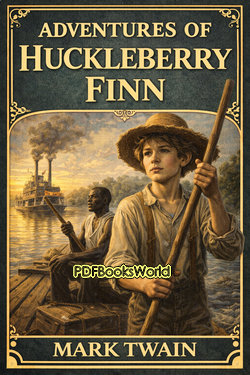
A Landmark of American Literature
Adventures of Huckleberry Finn is one of the most important and influential novels in American literature. Written by Mark Twain and published in 1884, the novel follows the journey of a young boy traveling along the Mississippi River while confronting the realities of freedom, morality, and society. Blending humor, adventure, satire, and social criticism, the book remains widely discussed for its powerful storytelling and its examination of race and human conscience.
Escaping Into The Unknown
The story centers on Huckleberry Finn, a boy struggling to escape the abuse and instability caused by his alcoholic father. After faking his own death, Huck flees down the Mississippi River, where he encounters Jim, an enslaved man who has run away in search of freedom. Together they begin a dangerous journey aboard a raft, hoping to escape the limitations and dangers of the society surrounding them.
As Huck and Jim travel downriver, they meet con artists, feuding families, criminals, and ordinary people whose actions reveal the contradictions and prejudices of society. Their experiences gradually force Huck to question the beliefs and moral rules he has been taught since childhood.
A Friendship At The Heart of The Novel
One of the most memorable aspects of the novel is the evolving friendship between Huck and Jim. Although Huck initially accepts the racist attitudes common in his society, his experiences with Jim slowly change his understanding of loyalty, humanity, and freedom.
Mark Twain uses their relationship to challenge social prejudice and expose the cruelty and hypocrisy of slavery. Jim is portrayed not simply as a supporting character, but as a compassionate, intelligent, and deeply human individual whose presence shapes Huck’s emotional growth throughout the story.
Adventure, Satire, and Social Criticism
While the novel contains exciting adventures and humorous moments, it also serves as a sharp criticism of social injustice and hypocrisy in nineteenth-century America. Twain satirizes racism, violence, greed, and the false respectability of society through many of the characters Huck encounters during the journey.
The Mississippi River itself becomes an important symbol within the novel. For Huck and Jim, the river represents freedom, escape, and the possibility of a life beyond the restrictions imposed by society.
Modern readers continue to study Adventures of Huckleberry Finn because of its literary importance and controversial history. The novel’s use of racial language and portrayal of slavery have generated debate for decades, particularly in educational settings. At the same time, many scholars argue that Twain intended the novel as a criticism of racism and social injustice.
Its ability to provoke discussion about morality, prejudice, and American history has helped the novel remain relevant across generations of readers and critics.
The Lasting Influence of Mark Twain’s Novel
The impact of Adventures of Huckleberry Finn extends far beyond literature classrooms. The novel influenced generations of writers through its realistic dialogue, regional storytelling, and first-person narrative style. Many critics consider it one of the first truly modern American novels.
The story has also inspired films, theatre productions, television adaptations, and modern reinterpretations that continue to explore Huck and Jim’s journey from new perspectives.
Final Thoughts
Adventures of Huckleberry Finn remains a powerful combination of adventure story and social commentary. Through memorable characters, emotional growth, and sharp observations about society, Mark Twain created a novel that continues to challenge, entertain, and influence readers more than a century after its publication.
For readers interested in classic American literature, coming-of-age stories, and novels that examine freedom, morality, and social injustice, this book remains an essential and thought-provoking reading experience.