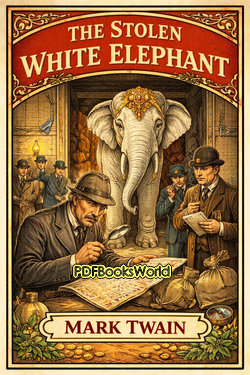
The Stolen White Elephant
by Mark Twain
A Missing Elephant Turns Into a Wildly Absurd Detective Investigation
The Stolen White Elephant by Mark Twain is a comic detective story that transforms a ridiculous situation into an even more ridiculous investigation. When a sacred white elephant disappears under mysterious circumstances, officials launch an enormous search effort filled with confusion, false reports, pointless theories, and complete chaos.
Rather than creating a serious mystery, Twain uses the investigation to parody law enforcement, newspaper sensationalism, and the growing popularity of detective fiction during the nineteenth century. The more intensely the detectives work, the more absurd the situation becomes.
The result is energetic, satirical, and intentionally outrageous.
The Theft Immediately Creates Public Panic
The story begins when a valuable white elephant from Siam disappears while under official protection. Because the animal is considered sacred and politically important, authorities treat the theft as an international crisis.
Detectives quickly organize a massive investigation involving:
- Endless witness reports
- Conflicting clues and rumors
- Large rewards and public announcements
- Constant newspaper coverage
- Wildly exaggerated detective activity
Instead of bringing clarity, the investigation only becomes more chaotic.
Twain Mocks Detective Fiction and Public Authority
One of the story’s main comic targets is the exaggerated confidence of detectives and officials who pretend to understand situations that are clearly spiraling out of control.
Overconfident Investigators
Detectives constantly announce progress even when they possess little real understanding.
Meaningless Evidence
Small details are treated as enormously important despite leading nowhere.
Bureaucratic Confusion
Official systems create endless paperwork, reports, and public excitement without solving the problem.
This satirical approach turns the investigation itself into the joke.
The Humor Grows Through Escalation
Twain carefully increases the absurdity as the story continues. Every new clue creates additional confusion, and every official statement makes the situation seem even less believable.
The comedy depends heavily on:
- Exaggerated seriousness
- Ridiculous misunderstandings
- Absurdly detailed reports
- Comic public hysteria
- The contrast between logic and complete nonsense
This escalating chaos gives the story strong comic momentum.
The White Elephant Becomes a Symbol of Public Obsession
The elephant itself is almost less important than the reaction surrounding it. Twain uses the situation to satirize how governments, newspapers, and crowds can transform unusual events into spectacles.
The story quietly criticizes:
- Media sensationalism
- Blind trust in official expertise
- The public appetite for dramatic news
- The inefficiency of large institutions
These themes make the satire feel surprisingly modern.
The Writing Style Feels Fast, Dry, and Theatrical
Twain tells the story with straight-faced seriousness, which makes the absurd events even funnier. Official interviews, police reports, and dramatic announcements are presented as though they describe a genuine crisis of enormous importance.
Deadpan Humor
Ridiculous situations are described with calm and formal language.
Rapid Escalation
The investigation grows increasingly chaotic at high speed.
Sharp Comic Timing
Twain carefully delays and complicates simple answers for humorous effect.
This style keeps the story entertaining from beginning to end.
A Clever Satire Disguised as a Detective Story
The Stolen White Elephant remains enjoyable because it transforms detective fiction into comic parody while also mocking public institutions and social hysteria. Mark Twain turns a simple missing-animal case into a wildly exaggerated spectacle of confusion and official incompetence.
Readers interested in humorous mysteries, satire, and absurd storytelling may especially appreciate the novella’s playful chaos. Beneath the laughter lies a sharp observation about how easily people, governments, and newspapers can lose control once excitement and public attention take over.
Similar Genres
About the Author

Mark Twain, the pen name of Samuel Langhorne Clemens, remains one of America's most beloved authors and humorists. Born in Missouri in 1835, he drew inspiration from his experiences along the Mississippi River, transforming everyday life into unforgettable stories filled with wit, adventure, and social insight. Explore Mark Twain books to discover the author's life, literary career, and access notable works, including Adventures of Huckleberry Finn, The Adventures of Tom Sawyer, Life on the Mississippi, Roughing It , and more.