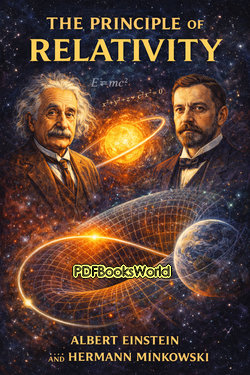
The Principle of Relativity
by Albert Einstein
The Revolutionary Theory That Changed Our Understanding of the Universe
The Principle of Relativity by Albert Einstein is one of the most influential scientific works of the twentieth century. In this collection of groundbreaking papers and explanations, Einstein and other leading physicists present ideas that transformed humanity's understanding of space, time, motion, and gravity. The work introduced concepts that challenged centuries of accepted scientific thought and laid the foundation for modern physics.
Before relativity, many scientists believed that space and time were fixed and unchanging. Einstein's theories revealed a far more complex reality, showing that measurements of time and distance depend on the observer's motion. These discoveries not only reshaped theoretical science but also influenced technologies and scientific research that continue to affect everyday life.
The Birth of a Scientific Revolution
At the beginning of the twentieth century, physicists faced several problems that existing theories could not fully explain. Observations of light, motion, and electromagnetic phenomena suggested that traditional ideas about the universe might be incomplete.
Einstein addressed these challenges through a new way of thinking about nature. His work proposed that the laws of physics remain the same for all observers moving at constant speeds and that the speed of light is constant regardless of the observer's motion. These ideas became the foundation of the Special Theory of Relativity.
Understanding the Core Idea
The principle of relativity states that the laws of nature operate consistently for all observers who are moving uniformly. This seemingly simple idea has profound consequences. It means that concepts such as time and distance are not absolute but can vary depending on an observer's frame of reference.
The famous relationship between mass and energy is one result of this theory:
This equation demonstrates that mass and energy are closely related and can be converted into one another under certain conditions.
Major Concepts Explored in the Work
- Special Relativity: The relationship between space, time, and motion.
- Space-Time: The idea that space and time form a unified framework.
- Mass-Energy Equivalence: The connection expressed by the famous equation.
- The Speed of Light: A universal constant central to the theory.
- Frames of Reference: Different observers may measure events differently.
From Special to General Relativity
The work also points toward Einstein's later development of General Relativity, which expanded his ideas to include gravity. Instead of viewing gravity as a force acting across space, Einstein described it as a consequence of the curvature of space-time caused by mass and energy.
This revolutionary interpretation explained phenomena that earlier theories could not fully account for, including the motion of planets and the bending of light near massive objects.
The Impact on Science
The influence of relativity extends far beyond theoretical physics. The theory has been confirmed repeatedly through observation and experiment, becoming one of the most successful scientific frameworks ever developed. It has contributed to advances in astronomy, cosmology, particle physics, and our understanding of black holes and the evolution of the universe.
Many modern technologies also rely on principles related to relativity. Satellite navigation systems, for example, must account for relativistic effects to maintain accurate positioning data.
Major Themes in the Book
- Scientific Inquiry: Progress often requires questioning accepted assumptions.
- Observation and Evidence: Theories must be tested against reality.
- Innovation: New ideas can transform entire fields of knowledge.
- Unity of Nature: Physical laws apply consistently throughout the universe.
- Curiosity: A desire to understand the cosmos drives scientific discovery.
Why the Work Remains Essential
The Principle of Relativity remains one of the most important scientific publications ever written. Its ideas fundamentally changed how humanity understands the universe and continue to influence scientific research more than a century after their introduction.
For readers interested in physics, astronomy, mathematics, or the history of science, the work offers a fascinating look at one of the greatest intellectual achievements in human history. Einstein's insights not only solved existing scientific puzzles but also opened entirely new ways of thinking about reality, making this book a landmark in the development of modern knowledge.
Similar Genres
About the Author
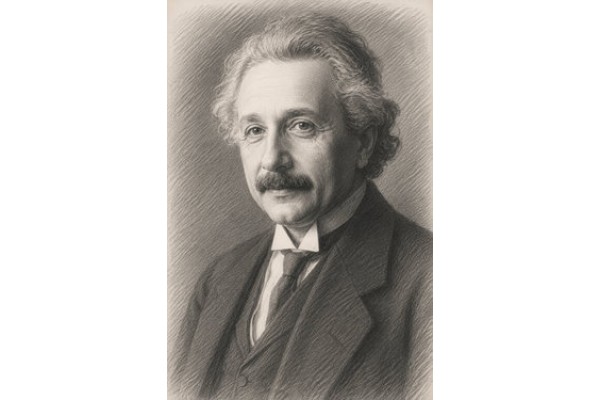
Albert Einstein was a German-born theoretical physicist, humanitarian, and author whose revolutionary ideas transformed modern science and reshaped humanity's understanding of the universe. Born in Ulm in 1879, Einstein developed the theory of relativity, explained the photoelectric effect, and made pioneering contributions to quantum physics, earning the Nobel Prize in Physics in 1921. Explore Albert Einstein books to discover the author's life, literary career, and access notable works, including Relativity - the Special and General Theory , and more.