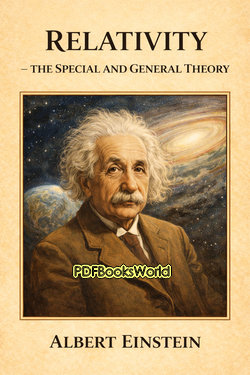
Relativity - the Special and General Theory
by Albert Einstein
Understanding Space, Time, and the Universe in Relativity: The Special and General Theory
Relativity: The Special and General Theory by Albert Einstein introduces readers to one of the most revolutionary scientific ideas in modern history. Written for general audiences, the book explains Einstein’s theories of relativity and how they changed humanity’s understanding of space, time, motion, gravity, and the structure of the universe.
Although the subject is complex, Einstein presents many concepts in a surprisingly accessible and thoughtful way.
The Big Idea Behind Relativity
Before Einstein’s work, many scientists believed space and time were fixed and absolute. Einstein challenged this view by arguing that measurements of time and distance can change depending on motion and gravity.
His theory introduced a completely new way of understanding physical reality.
One of the most famous relationships connected to the theory is:
This equation shows that mass and energy are deeply connected.
Special Relativity
The first part of the book explains the theory of special relativity, which focuses on objects moving at constant speeds.
Einstein explores ideas such as:
- The speed of light remaining constant
- Time moving differently at high speeds
- Changes in measurements of distance and motion
- The relationship between mass and energy
These ideas dramatically changed classical physics.
General Relativity and Gravity
The second part introduces general relativity, Einstein’s theory of gravity.
Instead of viewing gravity simply as a force pulling objects together, Einstein describes gravity as the bending of space and time caused by mass.
This concept is often represented mathematically through the relationship between matter and spacetime geometry.
The theory helped explain:
- The movement of planets
- The behavior of light near massive objects
- The structure of the universe
- Black holes and cosmic phenomena
Major Themes in the Book
The Power of Human Curiosity appears throughout the work as Einstein encourages readers to question traditional assumptions about reality.
The Relationship Between Science and Imagination also plays an important role, since many discoveries began as thought experiments and theoretical ideas.
The Complexity of the Universe becomes increasingly clear as Einstein explains how reality is more flexible and mysterious than previously believed.
Logical Reasoning and Observation remain central to Einstein’s scientific method.
Einstein’s Writing Style
Albert Einstein writes with patience and intellectual clarity, often using examples and thought experiments instead of highly advanced mathematics.
His style includes:
- Careful step-by-step explanations
- Logical reasoning
- Scientific curiosity
- Philosophical reflection
While some sections remain challenging, the book was specifically designed to help non-specialists understand the basic ideas of relativity.
Why the Book Remains Important
Relativity: The Special and General Theory remains one of the most influential scientific books ever written because it introduced ideas that transformed modern physics.
Einstein’s theories continue to influence:
- Astronomy
- Cosmology
- Space exploration
- Nuclear physics
- Modern technology
Many scientific discoveries of the 20th and 21st centuries rely on principles connected to relativity.
Why Readers Still Find It Fascinating
The book continues to attract readers because it challenges ordinary ideas about reality and encourages deeper thinking about the universe.
Readers often become fascinated by questions involving:
The nature of time, the structure of space, the speed of light, gravity, and humanity’s place within the universe.
Even today, Einstein’s ideas continue to inspire curiosity and scientific exploration.
Who Should Read This Book?
Relativity: The Special and General Theory is ideal for readers interested in:
Physics, cosmology, astronomy, scientific history, theoretical science, and the ideas of Albert Einstein.
It is especially rewarding for curious readers willing to explore challenging scientific concepts.
Final Thoughts
Relativity: The Special and General Theory by Albert Einstein remains one of the great scientific works of modern history. Through clear reasoning and revolutionary ideas, Einstein transformed how humanity understands space, time, gravity, and the universe itself.
Thought-provoking and intellectually inspiring, the book continues to introduce readers to one of the most important scientific breakthroughs ever achieved.
Similar Genres
About the Author
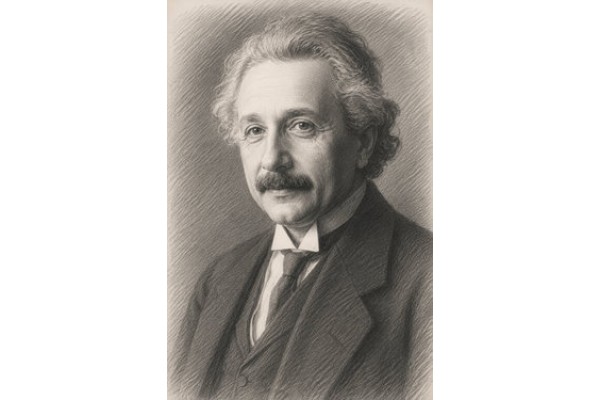
Albert Einstein was a German-born theoretical physicist, humanitarian, and author whose revolutionary ideas transformed modern science and reshaped humanity's understanding of the universe. Born in Ulm in 1879, Einstein developed the theory of relativity, explained the photoelectric effect, and made pioneering contributions to quantum physics, earning the Nobel Prize in Physics in 1921. Explore Albert Einstein books to discover the author's life, literary career, and access notable works, including The Principle of Relativity , and more.