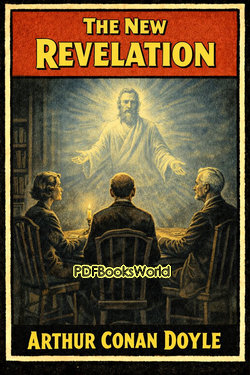
The New Revelation
by Arthur Conan Doyle
A Thought-Provoking Exploration of Spiritualism and Life Beyond Death
The New Revelation by Arthur Conan Doyle is a deeply personal nonfiction work in which the famous author explains his strong belief in spiritualism and communication beyond the physical world. Best known for creating Sherlock Holmes, Doyle surprised many readers when he became one of the most public supporters of spiritualist ideas during the early twentieth century.
In this book, Doyle describes why he became convinced that spiritualism offered important truths about human existence, death, and the afterlife. He combines personal reflection, philosophical discussion, and spiritual argument to explain his beliefs.
The work provides readers with a fascinating look into both Doyle’s personal convictions and the growing spiritualist movement of his time.
The Spiritual Questions That Inspired the Book
Doyle wrote The New Revelation during a period when many people were searching for answers about death and the possibility of life after death. The losses caused by war and illness led many families to seek comfort through spiritual beliefs and psychic experiences.
In the book, Doyle explains how he gradually became convinced that spiritualism was supported by evidence and personal testimony. He discusses séances, psychic communication, and reports from individuals who claimed to have experienced supernatural events.
Rather than presenting the subject as fantasy, Doyle approaches it with seriousness and emotional conviction.
Important Figures and Ideas Discussed
Key Subjects
- Arthur Conan Doyle
The author explains his personal journey toward accepting spiritualist beliefs. - Spiritualist Thinkers and Mediums
The book discusses individuals connected to psychic research and spiritual communication. - Religious and Philosophical Questions
Doyle compares spiritualism with traditional religious ideas about life and death. - Ordinary People Seeking Comfort
Many people turned to spiritualism while coping with grief and personal loss.
These topics help readers understand why spiritualism became so important to Doyle and many others during that era.
A Personal and Emotional Writing Style
Unlike Doyle’s fictional adventures, The New Revelation feels direct and deeply personal. He writes with sincerity and confidence, explaining his beliefs in simple and understandable language.
The tone is reflective rather than dramatic. Doyle often speaks as someone hoping to encourage thoughtful discussion rather than force agreement. His emotional investment in the subject becomes clear throughout the book.
This personal approach makes the work feel more like a conversation than a formal philosophical argument.
Main Themes Explored Throughout the Book
Themes
- Life After Death
The central focus of the book is the belief that human consciousness continues beyond physical death. - Faith and Spiritual Curiosity
Doyle explores humanity’s desire to understand existence and the unseen world. - Hope During Times of Loss
The book reflects the emotional need for comfort after grief and tragedy. - Science and Spiritual Belief
Doyle attempts to connect spiritual experiences with rational investigation and evidence.
These themes give the book emotional and philosophical depth while revealing the social atmosphere of the early twentieth century.
A Surprising Side of Arthur Conan Doyle
Readers familiar with Sherlock Holmes may find it surprising that Doyle strongly supported spiritualism. Holmes represented logic, observation, and scientific reasoning, while Doyle personally believed deeply in psychic phenomena and communication with spirits.
The New Revelation clearly demonstrates this different side of the author. The book reveals his passion for spiritual questions and his desire to share those beliefs publicly.
This contrast between Doyle’s fictional detective and his personal worldview continues to fascinate readers and historians alike.
Why the Book Still Interests Modern Readers
Even today, The New Revelation remains interesting because it offers insight into both spiritual history and Arthur Conan Doyle’s personal beliefs. Readers curious about spiritualism, religion, psychology, or supernatural thought can still find the book engaging.
The work also provides historical context for a movement that became highly influential during the early twentieth century. Doyle’s sincere and accessible writing style helps modern readers understand why these ideas appealed to so many people.
For readers interested in spiritual philosophy, historical belief systems, or the lesser-known side of Arthur Conan Doyle, this book remains a thoughtful and unusual read.
Similar Genres
About the Author

Arthur Conan Doyle occupies a unique place in literary history as the creator of Sherlock Holmes, a character whose influence extends far beyond the pages of classic fiction. Born in Edinburgh, Scotland, in 1859, Doyle trained as a physician before discovering that storytelling was his true calling. Explore Arthur Conan Doyle books to discover the author's life, literary career, and access notable works, including The Adventures of Sherlock Holmes, The Memoirs of Sherlock Holmes, The Return of Sherlock Holmes, The Hound of the Baskervilles , and more.