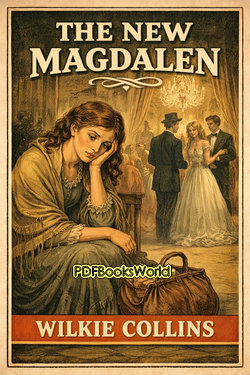
The New Magdalen
by Wilkie Collins
Identity, Redemption, and Social Judgment in a Powerful Victorian Drama
The New Magdalen by Wilkie Collins is a deeply emotional and socially provocative novel exploring identity, class prejudice, forgiveness, moral hypocrisy, and the possibility of personal redemption. Set partly against the backdrop of war and displacement, the story follows a woman attempting to escape the shame of her past while confronting the harsh moral expectations of Victorian society.
Collins combines suspense, emotional conflict, and social criticism to create one of his most compassionate and controversial works.
A Woman Assumes Another Life to Escape Her Past
The story begins during a time of war and chaos, when Mercy Merrick, a woman carrying the burden of social disgrace and emotional suffering, encounters another woman who dies unexpectedly under tragic circumstances.
Presented with an opportunity to leave behind her painful history, Mercy assumes the dead woman’s identity and enters a new social world filled with wealth, respectability, and emotional possibility.
At first, the deception appears capable of offering safety and renewal.
Yet Mercy’s growing emotional attachments and moral conscience gradually make the false identity increasingly difficult to sustain.
The fear of exposure, combined with Victorian society’s harsh condemnation of “fallen” women, creates constant emotional tension and psychological conflict.
The Figures Within the Emotional and Moral Conflict
- Mercy Merrick: A compassionate and emotionally wounded woman seeking dignity, acceptance, and redemption.
- The Family and Social Circle: Respectable Victorian figures shaped by moral judgment, affection, and social expectation.
- The Romantic Figures: Individuals whose emotional relationships with Mercy become complicated by secrecy and hidden identity.
- The Moral Observers and Critics: Characters representing rigid social attitudes toward reputation and female virtue.
The emotional fragility of Mercy’s new life gives the novel much of its dramatic intensity.
Can Society Forgive the Past?
One of the novel’s strongest ideas is that society often refuses compassion toward individuals attempting to rebuild their lives after personal failure or social disgrace. Collins sharply criticizes moral hypocrisy and the unequal standards applied to women within Victorian culture.
Mercy’s deception remains morally complicated, yet Collins portrays her with deep sympathy and emotional humanity.
The novel repeatedly asks whether personal goodness and sincere remorse matter more than social labels and past mistakes.
This moral complexity gives the story lasting emotional power.
Major Themes Running Through the Novel
- Redemption and Second Chances: Mercy struggles to escape shame and create a better future.
- Identity and Deception: False identity becomes both emotional refuge and source of psychological torment.
- Social Judgment and Moral Hypocrisy: Victorian society harshly condemns women while ignoring compassion and personal growth.
- Love, Forgiveness, and Emotional Truth: Genuine emotional connection conflicts with fear, secrecy, and social expectation.
Collins’s Passionate Social Storytelling
The New Magdalen demonstrates Wilkie Collins’s remarkable ability to blend suspenseful fiction with bold social criticism. The novel balances emotional intimacy with larger questions concerning morality, class, and gender.
Collins writes with unusual sympathy toward marginalized and socially condemned individuals.
The pacing steadily intensifies as emotional attachment and fear of revelation grow increasingly difficult to separate.
Why the Novel Still Resonates Today
Modern readers continue finding The New Magdalen compelling because its themes remain strikingly relevant. Social stigma, reinvention, public judgment, and the search for dignity after trauma continue shaping modern emotional and social experience.
Mercy Merrick especially remains one of Collins’s most humane and memorable heroines.
For readers interested in Victorian social fiction, emotionally complex heroines, identity-centered drama, and morally challenging narratives about redemption and compassion, this work remains moving, courageous, and deeply engaging.
Similar Genres
About the Author

Wilkie Collins earned a lasting reputation as one of the pioneers of modern mystery and sensation fiction. Born in London in 1824, he developed a storytelling style that combined suspense, memorable characters, and carefully constructed plots, keeping readers engaged from beginning to end. Explore Wilkie Collins books to discover the author's life, literary career, and access notable works, including The Moonstone, The Woman in White, After Dark, Basil , and more.