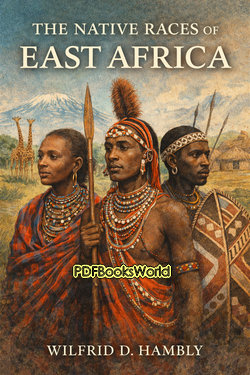
The Native Races of East Africa
by Wilfrid D. Hambly
An Early Anthropological Study of East African Peoples
The Native Races of East Africa by Wilfrid D. Hambly is a historical anthropological work that examines the cultures, societies, and traditions of various peoples living in East Africa. Written during the early twentieth century, the book reflects the growing academic interest in ethnography and the study of human societies. Hambly sought to document the customs, social structures, beliefs, and daily lives of communities across the region, creating a record that would contribute to contemporary understandings of African cultures.
Modern readers should recognize that the language and classifications used in the book reflect the attitudes and scholarly methods of its era. While some interpretations may now be considered outdated, the work remains valuable as a historical source and as an example of early anthropological research.
The Scope of the Study
East Africa is home to a remarkable diversity of peoples, languages, and cultural traditions. Hambly's work attempts to describe this diversity by examining different communities and their ways of life. Topics include family structures, social organization, economic activities, material culture, and traditional beliefs.
The book reflects an effort to record cultural practices that researchers feared might change rapidly under the influence of modernization and colonial administration.
Anthropology in the Early Twentieth Century
When Hambly wrote, anthropology was still developing as an academic discipline. Researchers often traveled extensively to observe communities, collect information, and compare cultural practices. Their studies helped expand knowledge about societies that were unfamiliar to many Western readers.
At the same time, modern scholarship recognizes that some early anthropological works were influenced by colonial perspectives and assumptions that are now questioned or rejected.
Major Themes Found Throughout the Book
- Cultural Diversity: The variety of traditions and social systems in East Africa.
- Ethnographic Observation: Recording customs, beliefs, and daily life.
- Social Organization: Examining family, leadership, and community structures.
- Historical Documentation: Preserving information about cultures during a period of change.
These themes make the work significant both as anthropology and as a historical record.
Customs and Daily Life
One of the book's primary strengths is its detailed attention to everyday activities and social practices. Hambly describes housing, clothing, agriculture, crafts, ceremonies, and other aspects of community life. Such descriptions provide valuable insight into how people organized their societies and adapted to local environments.
These observations help readers appreciate the richness and complexity of East African cultures.
The Importance of Historical Context
Because the book was written during the colonial era, it is important to read it with an awareness of its historical context. The terminology and analytical frameworks employed by Hambly differ significantly from those used by contemporary anthropologists. Modern readers can learn not only about East African societies but also about the development of anthropological thought itself.
This dual significance enhances the book's value as a historical document.
Why Readers Continue to Study the Book
- Anthropological History: An example of early ethnographic research.
- Cultural Documentation: Descriptions of East African societies and traditions.
- Historical Insight: A record of scholarly perspectives from its era.
- Educational Value: Useful for understanding the evolution of anthropology.
These qualities help maintain interest in the work among historians and researchers.
Why The Native Races of East Africa Remains Worth Reading
The Native Races of East Africa provides a detailed glimpse into the cultures and communities of East Africa as viewed through the lens of early twentieth-century anthropology. While modern readers should approach the book with an awareness of its historical context and limitations, Wilfrid D. Hambly's work remains an important source for understanding both the peoples it describes and the development of anthropological scholarship. Its detailed observations continue to offer valuable material for students of history, culture, and social science.
Similar Genres
About the Author
Wilfrid D. Hambly was a British anthropologist, ethnologist, and museum curator whose pioneering research contributed significantly to the study of indigenous cultures in Africa and North America. Explore Wilfrid D. Hambly books to discover the author's life, literary career, and access notable works, including The Native Races of British North America , and more.