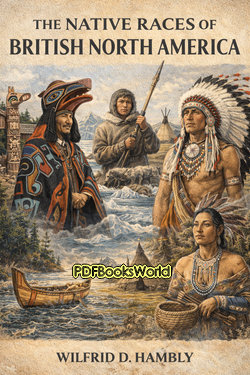
The Native Races of British North America
by Wilfrid D. Hambly
Exploring the Diverse Cultures of Indigenous North America
The Native Races of British North America by Wilfrid D. Hambly is a historical and anthropological study that examines the Indigenous peoples who lived across the vast regions of what is now Canada and parts of northern North America. Written during the early twentieth century, the book reflects the scholarly efforts of its time to document the traditions, social structures, technologies, and ways of life of Indigenous communities. Hambly sought to provide readers with a broad overview of the cultural diversity that existed across different regions and environments.
While modern scholarship has expanded and refined our understanding of Indigenous histories and cultures, Hambly's work remains an important historical source for studying how researchers of his era approached anthropology and cultural studies.
A Land of Many Peoples and Traditions
British North America encompassed a vast territory that included forests, plains, mountains, rivers, and Arctic regions. Indigenous communities adapted to these varied environments in different ways, developing unique languages, customs, and economic systems. Hambly emphasizes that there was no single Indigenous culture but rather a rich variety of societies shaped by geography, climate, and historical experience.
From coastal fishing communities to inland hunting societies, the book highlights the adaptability and resourcefulness that enabled these groups to thrive in diverse conditions for generations.
Understanding Regional Diversity
One of the central themes of the book is the importance of regional differences. Communities living along the Pacific coast developed traditions distinct from those of the northern Arctic or the interior plains. These variations influenced housing, transportation, clothing, food sources, and social organization.
By examining different regions individually, Hambly attempts to show how environment and culture interacted to create unique ways of life. This approach helps readers appreciate the complexity and diversity of Indigenous societies.
Key Topics Covered in the Book
- Traditional Lifestyles: Daily activities, occupations, and survival strategies.
- Languages and Customs: Cultural practices that shaped community identity.
- Housing and Transportation: Adaptations to different environments and climates.
- Social Organization: Family structures, leadership systems, and community relationships.
These subjects provide a broad introduction to the cultures discussed throughout the book and help illustrate their diversity.
The Role of Environment in Cultural Development
Hambly frequently examines how geography influenced cultural practices. Communities living near rivers and coastlines often relied heavily on fishing, while those in forested regions developed hunting and gathering traditions suited to their surroundings. Arctic groups adapted to some of the world's harshest climates through specialized knowledge and technologies.
This connection between people and environment forms an important part of the book's analysis and demonstrates the ingenuity of Indigenous communities in responding to local conditions.
Historical Value and Modern Perspectives
As a product of its time, the book reflects the terminology and scholarly approaches of the early twentieth century. Modern researchers often use different methods and place greater emphasis on Indigenous voices, oral histories, and community perspectives. Nevertheless, Hambly's work remains valuable as a historical document that records information and interpretations from an earlier period of anthropological study.
Readers today can benefit from considering both the information presented and the context in which it was written.
Important Themes Found Throughout the Work
- Cultural Diversity: Indigenous societies developed a wide range of traditions and practices.
- Adaptation: Communities responded creatively to different environments.
- Social Organization: Strong community structures supported daily life.
- Historical Understanding: Studying the past helps broaden knowledge of human cultures.
Why The Native Races of British North America Remains Significant
The Native Races of British North America continues to hold value for readers interested in anthropology, history, and Indigenous studies. Through its examination of diverse communities, cultural practices, and environmental adaptations, Wilfrid D. Hambly sought to document an important aspect of North American history. Although modern scholarship offers additional perspectives and insights, the book remains a useful historical resource that highlights the richness and diversity of Indigenous cultures across a vast and varied landscape.
Similar Genres
About the Author
Wilfrid D. Hambly was a British anthropologist, ethnologist, and museum curator whose pioneering research contributed significantly to the study of indigenous cultures in Africa and North America. Explore Wilfrid D. Hambly books to discover the author's life, literary career, and access notable works, including The Native Races of East Africa , and more.