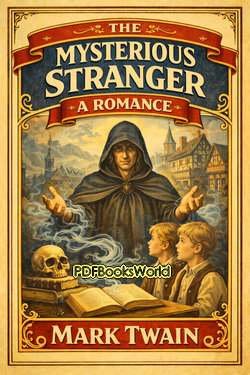
The Mysterious Stranger - A Romance
by Mark Twain
A Strange Visitor Forces a Quiet Village to Question Reality, Morality, and Human Nature
The Mysterious Stranger: A Romance by Mark Twain is one of the author’s darkest, most philosophical, and most unsettling works. Blending fantasy, satire, and psychological reflection, the novel explores human cruelty, innocence, religion, and the possibility that life itself may be meaningless or illusory.
Set in a small Austrian village during the sixteenth century, the story begins calmly with ordinary daily life before gradually shifting into something mysterious and deeply disturbing. When a strange young visitor named Satan appears, the villagers and young narrators become drawn into experiences that challenge everything they believe about morality, truth, and existence.
The novel feels dreamlike, haunting, and far more serious than Twain’s earlier comic adventures.
The Arrival of Satan Changes Everything
The mysterious stranger introduces himself as Satan, though he claims to be the nephew of the fallen angel rather than the devil himself. He possesses supernatural powers far beyond human understanding and views humanity with detached curiosity.
At first, the boys who meet him are fascinated by his abilities and confidence. However, his conversations and actions slowly reveal a deeply cynical perspective on human life.
The stranger challenges ideas connected to:
- Good and evil
- Religion and morality
- Human suffering
- Free will and destiny
- The meaning of existence
These philosophical themes drive the emotional and intellectual weight of the novel.
The Village Reflects Fear, Superstition, and Human Weakness
The small village setting allows Twain to examine ordinary human behavior under pressure. Fear, gossip, cruelty, religious suspicion, and public judgment spread quickly through the community.
Superstition and Fear
Villagers often react emotionally rather than rationally when faced with uncertainty.
Cruelty Beneath Respectability
Twain repeatedly exposes selfishness and hypocrisy hidden beneath public morality.
Innocence Confronting Harsh Reality
The young narrators slowly lose their simple understanding of the world.
This environment gives the novel a tense and uneasy atmosphere.
Twain’s Satire Becomes Darker and More Philosophical
Unlike Twain’s playful social comedies, this novel carries a much more pessimistic tone. The mysterious stranger often speaks critically about humanity, arguing that people are irrational, cruel, and trapped by illusion.
The narrative explores difficult ideas such as:
- The randomness of suffering
- The weakness of moral certainty
- The limitations of religion and social systems
- The possibility that human life lacks permanent meaning
These themes make the novel intellectually challenging and emotionally unsettling.
The Supernatural Elements Feel Dreamlike and Symbolic
Satan performs impossible acts throughout the story, manipulating time, matter, and reality itself. However, these supernatural moments are less about spectacle than philosophical reflection.
Power Without Emotion
The stranger views human suffering with calm detachment.
Reality Becomes Uncertain
The boundaries between dream, illusion, and truth begin collapsing.
Human Life Appears Fragile
Ordinary existence seems small and temporary beside cosmic forces.
This surreal atmosphere gives the novel its haunting quality.
The Writing Style Balances Simplicity and Darkness
Twain writes much of the story through the perspective of young narrators, creating a contrast between innocent observation and increasingly disturbing philosophical ideas.
The prose often combines:
- Quiet village realism
- Sharp satirical dialogue
- Dreamlike supernatural scenes
- Reflective philosophical discussion
- Gradually increasing emotional unease
This mixture helps the novel feel both personal and cosmic at the same time.
A Haunting and Unforgettable Late Twain Work
The Mysterious Stranger: A Romance remains one of Mark Twain’s most fascinating works because it reveals the author confronting profound questions about morality, suffering, illusion, and human existence itself. The novel abandons comforting certainty and instead presents a world filled with ambiguity and unsettling possibility.
Readers interested in philosophical fiction, dark satire, and psychological fantasy may find the novel especially compelling. Beneath its supernatural mystery lies a powerful meditation on human weakness, cosmic indifference, and the fragile nature of reality.
Similar Genres
About the Author
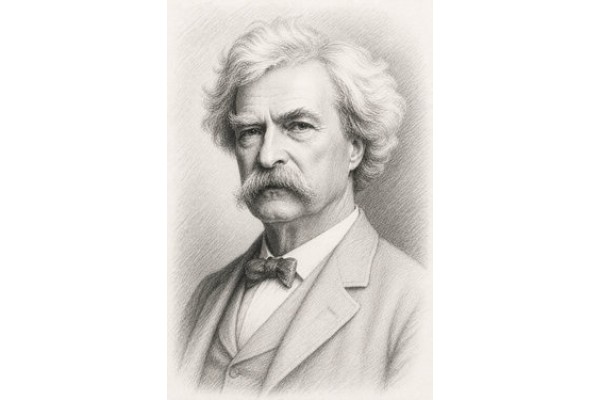
Mark Twain, the pen name of Samuel Langhorne Clemens, remains one of America's most beloved authors and humorists. Born in Missouri in 1835, he drew inspiration from his experiences along the Mississippi River, transforming everyday life into unforgettable stories filled with wit, adventure, and social insight. Explore Mark Twain books to discover the author's life, literary career, and access notable works, including Adventures of Huckleberry Finn, The Adventures of Tom Sawyer, Life on the Mississippi, Roughing It , and more.