
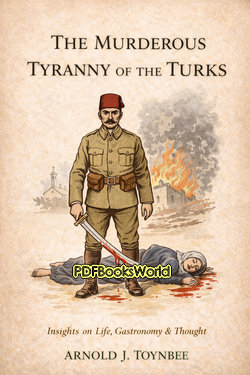
The Murderous Tyranny of the Turks
by Arnold J. Toynbee
A Historical and Political Critique Written During a Time of Conflict
The Murderous Tyranny of the Turks by Arnold J. Toynbee is a politically charged historical work examining violence, persecution, and political oppression within the late Ottoman Empire during the early twentieth century. Written in the context of wartime and humanitarian crisis, the book reflects contemporary concerns about atrocities, minority persecution, and international responsibility.
Arnold J. Toynbee, who later became one of the twentieth century’s most influential historians, wrote the work during a period of intense global conflict and political upheaval. The volume discusses reports of violence against Armenian and other Christian populations within the Ottoman Empire, presenting arguments shaped by the historical and political conditions of the era.
The book combines political commentary, historical reporting, and humanitarian advocacy.
The Historical Background of the Work
The volume emerged during the First World War, when international attention focused on reports of massacres, deportations, and suffering affecting Armenian communities and other minorities within the Ottoman Empire. The work reflects growing international debate concerning wartime atrocities and imperial decline.
Toynbee discusses political leadership, military conditions, and state policies connected to violence and repression during this turbulent historical period.
The book was written within a highly emotional and politically charged atmosphere shaped by war and humanitarian concern.
Toynbee’s Political and Historical Perspective
The work presents a strongly critical interpretation of Ottoman political authority and policies. Like many writings produced during wartime, the book reflects the perspectives, rhetoric, and political tensions of its historical moment.
Modern readers and historians often approach such texts critically, recognizing both their historical importance and the influence of wartime propaganda, political bias, and limited access to complete information.
The volume remains significant primarily as a historical document connected to early twentieth-century political and humanitarian discourse.
The Writing Style of Arnold J. Toynbee
Arnold J. Toynbee writes in a forceful and argumentative style emphasizing moral urgency and political criticism. The prose combines historical discussion with humanitarian concern and persuasive rhetoric.
The language reflects the emotional intensity of wartime political writing and international debate surrounding humanitarian crises.
Toynbee’s direct presentation gives the work strong historical and political character.
Main Themes and Historical Significance
The book explores themes of political oppression, violence, humanitarian crisis, nationalism, imperial decline, historical responsibility, and international awareness. It also reflects how wartime events shaped global political opinion and historical interpretation.
Through political argument and historical reporting, the work examines the human consequences of conflict and state power.
Why the Book Still Holds Importance
The Murderous Tyranny of the Turks remains historically significant because it reflects contemporary reactions to violence and persecution within the Ottoman Empire during World War I. Historians studying genocide, imperial history, wartime propaganda, and humanitarian activism often examine such works for insight into international opinion during the period.
The volume also illustrates how historical narratives are shaped by political context, emotion, and global conflict.
Its importance today lies mainly in its historical and documentary value.
The Lasting Importance of Historical Context
Works written during wartime often reveal not only the events being described, but also the fears, moral concerns, and political pressures shaping public discussion at the time. Modern historical study frequently compares multiple sources and perspectives to better understand complex historical events.
Books like this help readers examine how humanitarian crises and political conflict influenced twentieth-century international thought.
The continuing study of modern history and political violence helps preserve scholarly interest in works like this.
Final Thoughts
The Murderous Tyranny of the Turks by Arnold J. Toynbee is a historically important and politically charged work examining violence, oppression, and humanitarian crisis within the late Ottoman Empire during World War I. Through forceful commentary and historical reporting, the book reflects the emotional and political tensions of its era while contributing to broader debates about historical responsibility and human suffering.
For readers interested in World War I history, Ottoman studies, political history, humanitarian movements, and historical interpretation, this work remains an important historical document and subject of scholarly examination.
Similar Genres
About the Author
Arnold J. Toynbee was a British historian, political analyst, humanitarian, and author whose writings examined international affairs, diplomacy, and the rise and fall of civilizations. Although he is best known for his later multi-volume work A Study of History, Toynbee's early career was shaped by his close attention to the political upheavals of the early twentieth century. Explore Arnold J. Toynbee books to discover the author's life, literary career, and access notable works.