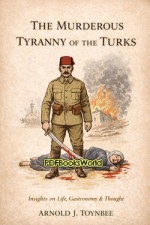
Arnold J. Toynbee
Arnold J. Toynbee was a British historian, political analyst, humanitarian, and author whose writings examined international affairs, diplomacy, and the rise and fall of civilizations. Although he is best known for his later multi-volume work A Study of History, Toynbee's early career was shaped by his close attention to the political upheavals of the early twentieth century. His research often focused on the relationship between historical events and human society, combining detailed documentation with thoughtful analysis. His book The Murderous Tyranny of the Turks belongs to this early period and reflects contemporary efforts to document the suffering of civilian populations during the final years of the Ottoman Empire.
A Historian of World Affairs
Arnold J. Toynbee believed that history should help people understand the forces that shape nations and civilizations. Educated at Oxford University, he developed a reputation for careful scholarship and an interest in international relations. Throughout his career, he examined conflicts, diplomacy, cultural change, and the long-term development of societies. His ability to place individual events within broader historical patterns made him one of the most influential historians of the twentieth century.
Beyond academic research, Toynbee was deeply interested in humanitarian concerns and the consequences of war. His early writings frequently addressed contemporary international crises, drawing attention to the experiences of civilians as well as the political decisions that affected them. This combination of historical inquiry and public engagement became a defining feature of his work.
Documenting a Humanitarian Crisis
In The Murderous Tyranny of the Turks, Toynbee examines reports of atrocities committed against Armenian and other Christian populations during the First World War. Written in the context of the conflict, the book sought to inform readers about the humanitarian crisis unfolding within the Ottoman Empire. As with many contemporary publications, it reflects the evidence, perspectives, and political circumstances of its time. Today, the work is valued primarily as a historical source that contributes to the study of wartime reporting, international opinion, and the history of the Armenian Genocide, while also illustrating how governments, journalists, and historians documented mass violence during the early twentieth century.
Notable Works
- The Murderous Tyranny of the Turks – An early historical account documenting reports of atrocities and humanitarian suffering during the First World War.
- A Study of History – Toynbee's monumental examination of the development and decline of civilizations across world history.
- Civilization on Trial – Essays exploring the challenges facing modern societies after the Second World War.
- The World and the West – A study of the interactions between Western and non-Western civilizations.
- Experiences – An autobiographical work reflecting on Toynbee's life, scholarship, and intellectual development.
An Enduring Legacy
Arnold J. Toynbee remains one of the twentieth century's most influential historians, remembered for his broad vision of world history and his commitment to understanding the forces that shape civilizations. His writings continue to be studied by historians, political scientists, and readers interested in global affairs. The Murderous Tyranny of the Turks is an important example of his early historical writing, preserving contemporary documentation of a major humanitarian tragedy while illustrating the role of historical scholarship in recording events of international significance. Visitors to PDF Books World can explore Toynbee's public domain works to discover thoughtful studies of history, civilization, and the complex events that have shaped the modern world.