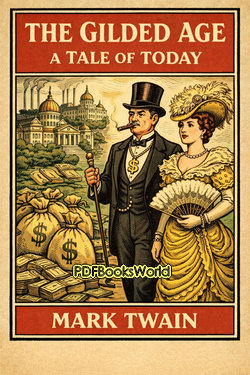
The Gilded Age - A Tale of Today
by Mark Twain
Greed, Politics, Speculation, and Social Ambition in Post-Civil War America
Corrupt politicians, land schemes, sudden fortunes, social climbing, and reckless ambition dominate the sprawling world of The Gilded Age: A Tale of Today by Mark Twain and Charles Dudley Warner. Part satire and part social novel, the book examines the chaotic transformation of the United States during the decades following the Civil War, when rapid industrial growth and speculative wealth reshaped American society.
The novel became so influential that its title eventually defined the entire historical period now known as the “Gilded Age.”
A Nation Obsessed With Wealth and Opportunity
The story unfolds in an America where economic expansion creates enormous dreams alongside widespread corruption and disappointment.
Railroads, western land speculation, political influence, and business schemes promise instant success to anyone bold enough to chase fortune.
Yet beneath the glittering surface lies dishonesty, greed, manipulation, and social inequality.
The term “gilded” itself suggests something covered in gold on the outside while concealing flaws underneath.
The Characters Navigating Ambition and Corruption
The novel follows multiple characters attempting to succeed within this unstable and rapidly changing society.
- The Hawkins family pursuing wealth through speculative land ventures
- Politicians and businessmen exploiting influence and opportunity
- Laura Hawkins, ambitious and socially determined
- Various schemers and dreamers chasing fortune in Washington and beyond
Their struggles reveal both the excitement and moral danger of unchecked ambition.
Political Satire at the Heart of the Novel
One of the book’s strongest elements is its sharp criticism of political corruption. Twain and Warner portray government offices, lobbying, and business interests as deeply entangled.
Influence can often be purchased, and public service becomes mixed with personal profit.
The satire exposes:
- Political dishonesty
- Speculative financial schemes
- The obsession with status and money
- The instability of rapid economic growth
Many of these themes still feel surprisingly modern.
Humor Mixed With Social Criticism
Although the novel critiques greed and corruption, it also contains substantial humor and comic exaggeration.
Twain’s wit appears throughout the dialogue, absurd situations, and ironic treatment of ambitious characters convinced they are on the edge of greatness.
The comedy prevents the social criticism from becoming overly grim while making the satire even sharper.
Readers are encouraged both to laugh and to recognize uncomfortable truths.
The Writing Style of Twain and Warner
The collaboration combines Twain’s energetic humor with Warner’s more restrained social observation. Together they create a narrative balancing entertainment with political and cultural commentary.
The novel moves through many locations and characters, reflecting the restless expansion and instability of American society during the era.
The tone shifts easily between comedy, realism, and moral criticism.
Why The Gilded Age Still Feels Relevant
The Gilded Age: A Tale of Today remains important because the issues it explores continue to shape modern society. Wealth inequality, political corruption, speculation, media influence, and social ambition remain familiar concerns.
For readers interested in American history, political satire, nineteenth-century literature, and socially critical fiction, Mark Twain and Charles Dudley Warner’s novel offers a lively and remarkably perceptive portrait of a nation transformed by money and ambition.
Similar Genres
About the Author
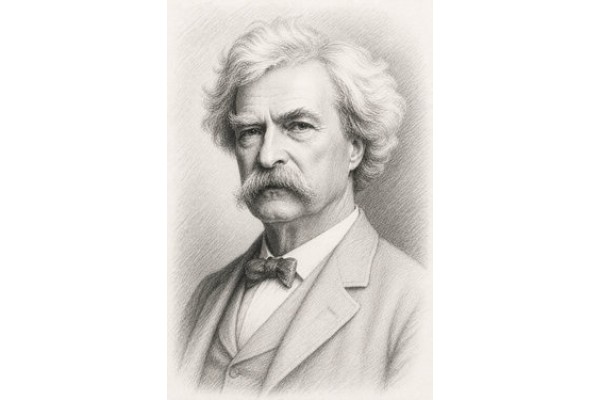
Mark Twain, the pen name of Samuel Langhorne Clemens, remains one of America's most beloved authors and humorists. Born in Missouri in 1835, he drew inspiration from his experiences along the Mississippi River, transforming everyday life into unforgettable stories filled with wit, adventure, and social insight. Explore Mark Twain books to discover the author's life, literary career, and access notable works, including Adventures of Huckleberry Finn, The Adventures of Tom Sawyer, Life on the Mississippi, Roughing It , and more.