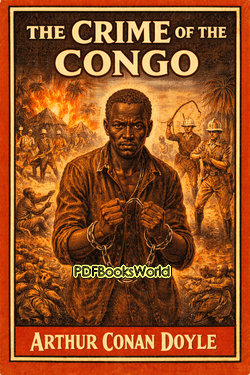
The Crime of the Congo
by Arthur Conan Doyle
A Powerful Exposure of Cruelty and Injustice in Colonial Africa
The Crime of the Congo by Arthur Conan Doyle is a serious and deeply emotional nonfiction work that investigates the suffering and abuse that took place in the Congo Free State during the rule of King Leopold II of Belgium. Unlike Doyle’s adventure and detective fiction, this book focuses on real historical events and human rights abuses.
Through research, reports, and eyewitness accounts, Doyle describes the violence, forced labor, and exploitation experienced by many Congolese people during the colonial period. The book was written as part of an international effort to expose these injustices and demand reform.
Although difficult at times, the work remains an important historical document and a powerful example of early human rights activism.
The Historical Background of the Congo Crisis
During the late nineteenth and early twentieth centuries, the Congo Free State was controlled personally by King Leopold II. Large amounts of rubber and other valuable resources were taken from the region, often through brutal systems of forced labor.
Doyle explains how local populations were punished if production demands were not met. Villages suffered violence, families were separated, and fear became part of daily life for many people living under colonial rule.
The book also discusses how reports from missionaries, travelers, and investigators slowly revealed the true conditions inside the Congo to the international public.
Important Figures Mentioned in the Book
Key People
- Arthur Conan Doyle
The author who used his public reputation to draw attention to the humanitarian crisis in the Congo. - King Leopold II
The Belgian ruler whose administration became widely criticized for severe abuses in the Congo Free State. - Missionaries and Investigators
Individuals who gathered evidence and shared eyewitness reports about conditions in the region. - The Congolese People
The victims of forced labor, violence, and exploitation whose suffering became central to international concern.
These figures help readers understand both the political system and the human tragedy described in the book.
A Direct and Emotional Writing Style
Doyle writes with strong emotion and moral outrage throughout the book. His goal was not simply to provide information but also to persuade readers that urgent action was necessary.
The language is clear and forceful, making the seriousness of the situation impossible to ignore. Doyle combines statistics, testimony, and personal commentary to build a compelling argument against colonial abuse.
Even modern readers may find the descriptions shocking because of the scale of suffering described in the reports.
Main Themes Explored in the Work
Themes
- Human Rights and Justice
The book strongly condemns cruelty, exploitation, and abuse of power. - Colonialism and Greed
Doyle examines how economic profit led to violence and oppression in the Congo. - The Power of Public Awareness
The work highlights the importance of exposing injustice through journalism and activism. - Compassion and Responsibility
Doyle argues that the international community had a moral duty to respond to human suffering.
These themes continue to make the book historically and socially important today.
A Very Different Work From Sherlock Holmes
Readers familiar with Arthur Conan Doyle’s detective fiction may be surprised by the serious and political nature of The Crime of the Congo. Instead of fictional mysteries, Doyle focuses entirely on real-world injustice and humanitarian concern.
However, his investigative skill still appears throughout the book. Doyle carefully examines evidence, compares reports, and builds arguments in a logical and organized way.
The work also reveals Doyle’s willingness to use his fame and writing ability to speak out against international wrongdoing.
Why the Book Still Matters Today
More than a century after publication, The Crime of the Congo remains relevant because it documents one of the major humanitarian scandals of the colonial era. The issues of exploitation, human rights, and international responsibility discussed in the book still connect with modern global concerns.
The book also serves as an important reminder of how writers, journalists, and activists can influence public opinion and encourage reform.
For readers interested in history, politics, colonial studies, or humanitarian activism, this work remains both educational and deeply thought-provoking.
Similar Genres
About the Author
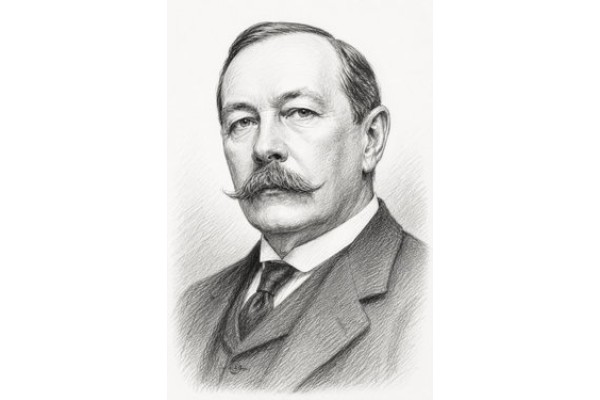
Arthur Conan Doyle occupies a unique place in literary history as the creator of Sherlock Holmes, a character whose influence extends far beyond the pages of classic fiction. Born in Edinburgh, Scotland, in 1859, Doyle trained as a physician before discovering that storytelling was his true calling. Explore Arthur Conan Doyle books to discover the author's life, literary career, and access notable works, including The Adventures of Sherlock Holmes, The Memoirs of Sherlock Holmes, The Return of Sherlock Holmes, The Hound of the Baskervilles , and more.