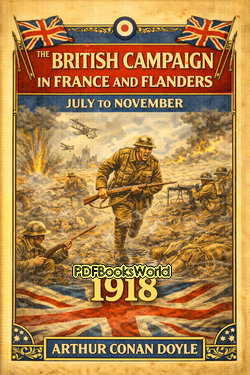
The British Campaign in France and Flanders—July to November 1918
by Arthur Conan Doyle
A History of the Final Allied Victories of World War I
The British Campaign in France and Flanders—July to November 1918 by Arthur Conan Doyle is a detailed military history describing the closing campaigns of the First World War on the Western Front. Covering the final months leading to the Armistice, the book examines the Allied offensives that gradually forced German armies into retreat and brought the conflict toward its conclusion.
Arthur Conan Doyle presents the events with a combination of strategic analysis, battlefield description, and respect for the soldiers who endured years of exhausting warfare. The narrative captures the growing momentum of the Allied advance during 1918 while also recognizing the enormous sacrifices required to achieve victory.
The work stands as an important historical record of the war’s final and decisive phase.
The Allied Advance Toward Victory
The book focuses on the major offensives launched by British and Allied forces after the failure of the German spring attacks earlier in 1918. Conan Doyle describes how coordinated operations gradually weakened German defenses across France and Flanders.
The narrative examines important battles and advances associated with the “Hundred Days Offensive,” during which Allied armies pushed German forces back across heavily defended territory. Improved coordination between infantry, artillery, tanks, and aircraft played a major role in the changing character of the battlefield.
The work also highlights the physical exhaustion, determination, and discipline required from soldiers fighting through the final months of the war.
Main Historical Figures Discussed in the Book
- British Military Commanders: Officers directing the final Allied offensives on the Western Front.
- British and Allied Soldiers: Troops participating in the campaigns leading to victory and the Armistice.
- French and Allied Leaders: Commanders coordinating multinational military operations.
- German Military Leadership: Officers attempting to resist the growing Allied advance.
These individuals shaped the military and political outcome of the First World War during its closing stage.
The Historical Narrative Style of Arthur Conan Doyle
Arthur Conan Doyle writes with clarity, dramatic structure, and careful attention to military detail. His ability to organize complicated campaigns into understandable narrative helped make his wartime histories widely respected.
The work balances strategic explanation with recognition of human endurance and sacrifice. Conan Doyle frequently emphasizes bravery, persistence, and discipline among ordinary soldiers while acknowledging the devastation caused by years of industrial warfare.
His narrative style gives both historical precision and emotional weight to the final campaigns of the war.
Main Themes Explored in the Book
- Military strategy and coordinated offensives
- Courage, endurance, and sacrifice
- The collapse of prolonged warfare
- The final transition from conflict to peace
Why the Book Still Holds Historical Importance
The British Campaign in France and Flanders—July to November 1918 remains historically important because it documents the campaigns that ended one of the largest and most destructive conflicts in modern history.
Readers interested in military history often value Conan Doyle’s detailed descriptions of battlefield operations, leadership decisions, and tactical developments during the final Allied offensives.
The work also preserves contemporary perspectives on victory, exhaustion, and the emotional impact of the war’s conclusion.
The Lasting Significance of the Final 1918 Campaigns
The Allied victories of late 1918 demonstrated how military coordination, industrial production, and strategic persistence eventually overcame the entrenched stalemate of earlier years. The final offensives marked the collapse of German resistance on the Western Front and directly led to the Armistice of November 11, 1918.
The campaigns also revealed the transformation of warfare through tanks, aircraft, artillery coordination, and large-scale multinational operations.
Historical studies of the final months of World War I continue to help readers understand how the conflict ended and how it reshaped the modern world.
Final Thoughts
The British Campaign in France and Flanders—July to November 1918 by Arthur Conan Doyle is a detailed and compelling account of the final Allied offensives that brought World War I to its conclusion. Through vivid narrative and careful military analysis, Conan Doyle captures the strategy, sacrifice, and determination that defined the closing months of the war.
For readers interested in military history, World War I, and historical campaign studies, this work remains both informative and historically significant.
Similar Genres
About the Author
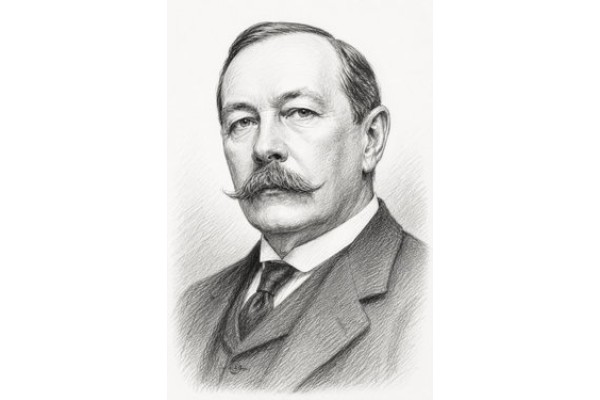
Arthur Conan Doyle occupies a unique place in literary history as the creator of Sherlock Holmes, a character whose influence extends far beyond the pages of classic fiction. Born in Edinburgh, Scotland, in 1859, Doyle trained as a physician before discovering that storytelling was his true calling. Explore Arthur Conan Doyle books to discover the author's life, literary career, and access notable works, including The Adventures of Sherlock Holmes, The Memoirs of Sherlock Holmes, The Return of Sherlock Holmes, The Hound of the Baskervilles , and more.