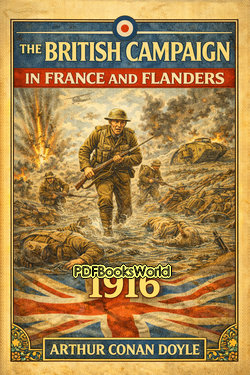
The British Campaign in France and Flanders 1916
by Arthur Conan Doyle
A Detailed History of Britain’s Campaigns During One of World War I’s Most Brutal Years
The British Campaign in France and Flanders 1916 by Arthur Conan Doyle is a historical account examining Britain’s military operations on the Western Front during one of the most devastating years of the First World War. Continuing his extensive wartime histories, Conan Doyle documents the battles, strategies, leadership decisions, and human sacrifices that shaped the conflict in 1916.
The year became especially associated with massive offensives, trench warfare, and unprecedented casualties, most notably during the Battle of the Somme. Conan Doyle presents the events with detailed military analysis while also honoring the endurance and courage of soldiers fighting under terrible conditions.
The work reflects both the scale of industrial warfare and the emotional weight carried by the nations involved.
The Battlefields of 1916
The book focuses heavily on the major campaigns fought in France and Flanders during 1916. The Battle of the Somme receives central attention because of its enormous military importance and tragic human cost.
Conan Doyle describes large-scale infantry attacks, artillery bombardments, trench systems, and the constant struggle to gain small areas of territory at tremendous expense. The narrative explains how military commanders attempted to break through heavily defended enemy lines using coordinated offensives.
The book also records the introduction of new technologies and tactics, including tanks and increasingly complex battlefield coordination.
Main Historical Figures Discussed in the Book
- British Military Commanders: Officers responsible for planning and directing major operations.
- British Soldiers and Volunteers: Men enduring trench warfare and large-scale offensives.
- French Allied Forces: Armies cooperating with British operations on the Western Front.
- German Military Leadership: Commanders defending heavily fortified positions.
These individuals shaped the military and human history of the conflict during one of its most difficult years.
The Historical Narrative Style of Arthur Conan Doyle
Arthur Conan Doyle writes with clarity, organization, and strong narrative energy. His style combines military detail with dramatic historical storytelling, helping readers understand the complexity of battlefield operations without losing sight of the human experience.
The work reflects admiration for discipline, endurance, and sacrifice while also recognizing the immense suffering caused by modern industrial warfare.
Conan Doyle’s skill as a storyteller allows the campaigns to feel vivid and emotionally powerful despite the technical nature of military history.
Main Themes Explored in the Book
- Trench warfare and military strategy
- Courage, sacrifice, and endurance
- The human cost of industrialized warfare
- The evolution of modern military technology
Why the Book Still Holds Historical Importance
The British Campaign in France and Flanders 1916 remains historically important because it documents one of the most significant and destructive years of World War I. Historians and readers interested in military history often study works like this to understand how the war evolved and why casualties became so enormous.
The book also preserves contemporary perspectives on leadership, battlefield conditions, and the emotional impact of prolonged conflict.
Its detailed descriptions continue to make it a valuable historical resource for understanding the Western Front.
The Lasting Significance of the 1916 Campaigns
The campaigns of 1916 demonstrated the deadly power of trench warfare and industrialized military technology. Battles such as the Somme revealed the enormous difficulty of achieving decisive victories against entrenched defenses supported by artillery and machine guns.
The year also marked important technological and tactical developments, including the first use of tanks in battle.
Modern studies of World War I continue to focus on 1916 because of its influence on military strategy, political history, and collective memory.
Final Thoughts
The British Campaign in France and Flanders 1916 by Arthur Conan Doyle is a detailed and powerful account of one of the most difficult years of the First World War. Through careful historical explanation and vivid battlefield narrative, Conan Doyle captures the strategy, suffering, and determination that defined the Western Front in 1916.
For readers interested in military history, World War I, and historical narrative writing, this work remains both informative and deeply significant.
Similar Genres
About the Author
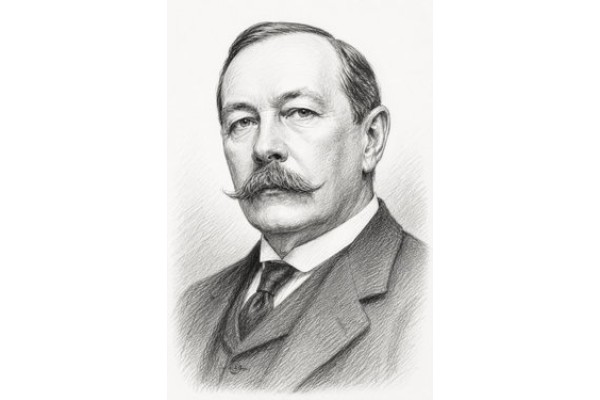
Arthur Conan Doyle occupies a unique place in literary history as the creator of Sherlock Holmes, a character whose influence extends far beyond the pages of classic fiction. Born in Edinburgh, Scotland, in 1859, Doyle trained as a physician before discovering that storytelling was his true calling. Explore Arthur Conan Doyle books to discover the author's life, literary career, and access notable works, including The Adventures of Sherlock Holmes, The Memoirs of Sherlock Holmes, The Return of Sherlock Holmes, The Hound of the Baskervilles , and more.