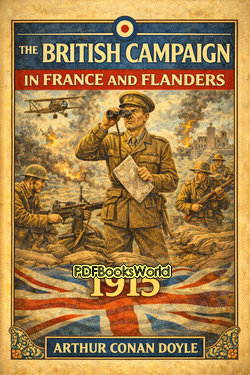
The British Campaign in France and Flanders 1915
by Arthur Conan Doyle
A Detailed Account of Britain’s Second Year in the First World War
The British Campaign in France and Flanders 1915 by Arthur Conan Doyle is a historical and military study examining Britain’s operations on the Western Front during the second year of World War I. Best known as the creator of Sherlock Holmes, Conan Doyle also wrote extensively about history and warfare, producing detailed accounts of the conflict based on military reports, official records, and contemporary observation.
The book describes the difficult campaigns fought in France and Belgium during 1915, a year marked by trench warfare, large-scale offensives, and growing recognition of the brutal realities of modern industrial war.
Conan Doyle combines military analysis with admiration for the endurance and courage of soldiers facing exhausting and dangerous conditions.
The Harsh Reality of the Western Front
The work examines major battles and military operations carried out by British and Allied forces during 1915. Attention is given to trench warfare, artillery bombardments, defensive fortifications, and the enormous human cost of prolonged fighting.
Conan Doyle describes the strategic challenges faced by commanders attempting to break through heavily defended enemy positions. Battles involving Ypres, Neuve Chapelle, Loos, and other major engagements receive detailed discussion.
The narrative also reflects how warfare changed during this period, with machine guns, poison gas, heavy artillery, and trench systems transforming military tactics and battlefield experience.
Main Historical Figures Discussed in the Book
- British Military Commanders: Officers directing operations on the Western Front.
- British Expeditionary Force Soldiers: Troops enduring trench warfare and major offensives.
- French and Allied Forces: Allied armies cooperating against German positions.
- German Military Leadership: Commanders defending strategic positions across France and Flanders.
These individuals and armies shaped the course of the war during one of its most difficult phases.
The Historical Style of Arthur Conan Doyle
Arthur Conan Doyle writes with clarity, detail, and strong narrative energy. His style combines factual military reporting with dramatic storytelling, helping readers understand both strategy and the emotional intensity of war.
The work reflects respect for soldiers and military service while also acknowledging the terrible human cost of modern conflict. Conan Doyle often emphasizes courage, endurance, and discipline under extreme conditions.
His ability to organize complex campaigns into readable historical narrative helped make the book accessible to a wide audience.
Main Themes Explored in the Book
- Military strategy and trench warfare
- Courage, sacrifice, and endurance
- The changing nature of modern warfare
- International cooperation during conflict
Why the Book Still Holds Historical Importance
The British Campaign in France and Flanders 1915 remains historically important because it documents a critical year in World War I when trench warfare and industrialized combat became firmly established on the Western Front.
Readers interested in military history often value Conan Doyle’s detailed descriptions of battles, troop movements, and wartime conditions. The book also preserves contemporary perspectives on leadership, strategy, and morale during the conflict.
Its careful historical narrative continues to make it useful for understanding the realities of the First World War.
The Lasting Significance of the 1915 Campaigns
The campaigns of 1915 revealed how difficult it would be for armies to achieve decisive victories against fortified trench systems supported by modern weapons. The year introduced increasingly destructive forms of warfare, including the wider use of poison gas and massive artillery attacks.
These battles shaped military planning for the remainder of the war and demonstrated the enormous human cost of industrial conflict.
Historical studies of the Western Front continue to help readers understand the scale and complexity of World War I.
Final Thoughts
The British Campaign in France and Flanders 1915 by Arthur Conan Doyle is a detailed and compelling account of Britain’s military operations during a critical stage of World War I. Through careful historical explanation and vivid battlefield description, Conan Doyle captures both the strategic challenges and the human endurance that defined the war on the Western Front.
For readers interested in military history, World War I, and historical narrative writing, this work remains both informative and historically significant.
Similar Genres
About the Author
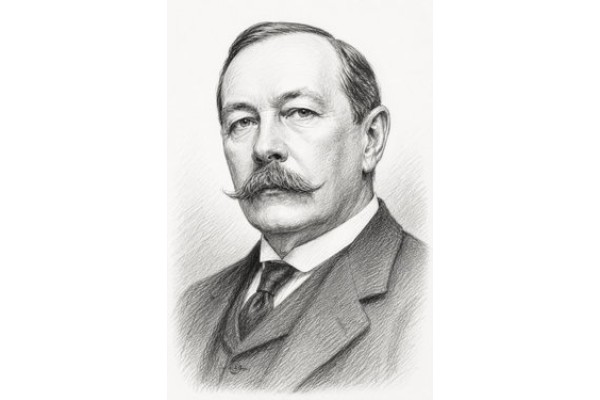
Arthur Conan Doyle occupies a unique place in literary history as the creator of Sherlock Holmes, a character whose influence extends far beyond the pages of classic fiction. Born in Edinburgh, Scotland, in 1859, Doyle trained as a physician before discovering that storytelling was his true calling. Explore Arthur Conan Doyle books to discover the author's life, literary career, and access notable works, including The Adventures of Sherlock Holmes, The Memoirs of Sherlock Holmes, The Return of Sherlock Holmes, The Hound of the Baskervilles , and more.