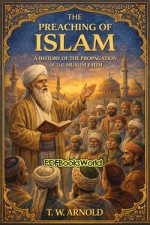
T. W. Arnold
Thomas Walker Arnold, widely known as T. W. Arnold, was an English historian, orientalist, educator, and scholar whose research greatly advanced the academic study of Islam and its history. Through careful scholarship and extensive use of historical sources, Arnold examined the spread of Islamic civilization, the development of Muslim societies, and the cultural exchanges that shaped the medieval world. His balanced and methodical approach earned him lasting respect among historians and scholars of comparative religion.
Academic Career
T. W. Arnold devoted much of his career to teaching and researching Islamic history and culture. He served as a professor in India before later joining the School of Oriental Studies in London, where he continued his influential work on Islamic civilization. His academic interests ranged from religious history and philosophy to art, education, and cross-cultural relations, reflecting a broad understanding of the societies he studied.
Arnold's teaching and publications encouraged a deeper appreciation of Islamic history while promoting careful historical analysis based on primary sources rather than assumption or prejudice.
Writing Style and Historical Perspective
Arnold wrote in a clear, scholarly, and accessible style that combined meticulous research with thoughtful interpretation. His works emphasized historical evidence, cultural context, and balanced discussion, allowing readers to understand the complexity of religious and social developments across different regions and periods. Rather than presenting simplified narratives, he explored the many historical, political, and cultural factors that influenced the growth of civilizations.
This measured approach made his books valuable to both academic readers and those seeking an informed introduction to Islamic history.
Contributions to Historical Scholarship
T. W. Arnold made lasting contributions to the study of Islamic history by examining the historical development of Muslim societies and their interactions with other cultures. His research highlighted the diversity of Islamic civilization and encouraged comparative study across religious and cultural traditions. His writings have remained influential in the fields of history, religious studies, and Middle Eastern scholarship for more than a century.
Today, historians continue to value his careful documentation and commitment to objective historical inquiry.
Essential Works
- The Preaching of Islam – Arnold's landmark study examining the historical spread of Islam across different regions and societies.
- The Caliphate – A historical examination of the institution of the caliphate and its development in Islamic history.
- Painting in Islam – A study exploring artistic traditions and visual culture within the Islamic world.
- The Legacy of Islam – An influential work discussing the contributions of Islamic civilization to world history and culture.
Enduring Legacy
T. W. Arnold is remembered as one of the leading scholars of Islamic history and civilization in the early twentieth century. Through rigorous research, balanced historical analysis, and accessible writing, he broadened understanding of the Islamic world and its enduring influence on global culture. Today, his public domain works continue to serve as valuable resources for readers interested in religious history, Islamic studies, comparative civilization, and the rich intellectual heritage of the medieval and modern world.