Sir Norman Lockyer
Sir Norman Lockyer was an English astronomer, physicist, science writer, and one of the pioneers of modern astrophysics. Best known for his discovery of helium through solar spectroscopy before the element was identified on Earth, Lockyer transformed the study of astronomy by applying the principles of physics to the investigation of celestial bodies. His scientific achievements extended beyond research, as he was also a passionate educator and the founding editor of the influential journal Nature, helping to make scientific discoveries accessible to both specialists and the general public. Through decades of observation, research, and writing, he played a central role in advancing the public understanding of astronomy and the natural sciences.
Lockyer believed that scientific knowledge should be shared widely and that the study of the heavens offered valuable insight into both the universe and human history. His work combined careful observation with historical investigation, demonstrating how astronomy had influenced civilizations for thousands of years. By bringing together archaeology, history, and astronomy, he helped establish new ways of interpreting ancient monuments and their relationship to the skies.
A Pioneer of Astrophysics
During the nineteenth century, astronomy underwent a remarkable transformation as scientists began using spectroscopy to study the composition of stars and the Sun. Lockyer was among the leading figures in this revolution. His research demonstrated that light from celestial objects could reveal their chemical composition, opening an entirely new field of scientific investigation. His discovery of helium in the Sun remains one of the landmark achievements in the history of astronomy.
Beyond his own research, Lockyer encouraged collaboration among scientists and promoted public appreciation of scientific inquiry. His editorial leadership at Nature helped establish one of the world's most respected scientific journals, providing an important platform for new discoveries across many branches of science.
Connecting Ancient Civilizations and the Sky
Lockyer's interests extended beyond modern astronomy to the ways ancient civilizations observed and interpreted the heavens. He argued that many temples, monuments, and ceremonial sites were intentionally aligned with the movements of the Sun and stars. Although some of his conclusions have been refined by later research, his investigations helped stimulate the modern study of archaeoastronomy and encouraged scholars to examine the relationship between architecture, religion, and celestial observation.
His interdisciplinary approach demonstrated that astronomy has long shaped human culture, influencing calendars, agriculture, navigation, and religious traditions throughout history.
Exploring the Origins of Astronomical Knowledge
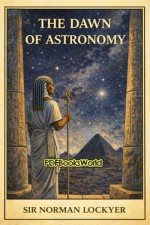
Among Lockyer's most influential books is The Dawn of Astronomy, a study examining how ancient Egyptian civilization observed the heavens and incorporated astronomical knowledge into its monuments and religious practices. The work combines historical research, archaeological evidence, and astronomical analysis to explore the origins of scientific observation in one of the world's earliest civilizations. It reflects Lockyer's lifelong fascination with understanding how humanity's study of the sky evolved over time.
Notable Works
- The Dawn of Astronomy – An influential study of ancient Egyptian astronomy and its connection to monuments and religion.
- Studies in Spectrum Analysis – Explores the scientific principles and applications of spectroscopy.
- Inorganic Evolution as Studied by Spectrum Analysis – Examines the relationship between spectroscopy and the evolution of matter.
- The Meteoritic Hypothesis – Presents theories on the formation and evolution of celestial bodies.
- Recent and Coming Eclipses – Explains the science and significance of solar eclipses for general readers.
An Enduring Legacy in Astronomy
Sir Norman Lockyer's contributions transformed both astronomy and scientific communication. His pioneering work in spectroscopy, his discovery of helium, and his efforts to connect astronomy with archaeology expanded humanity's understanding of the universe and its history. As a scientist, educator, and editor, he inspired generations of researchers and readers to look toward the skies with curiosity and critical inquiry. His writings continue to offer valuable insight into the history of astronomy and the enduring relationship between science and civilization.
Readers visiting PDF Books World can explore the works of Sir Norman Lockyer and discover insightful studies that illuminate the history of astronomy, the science of the stars, and humanity's enduring fascination with the heavens.