
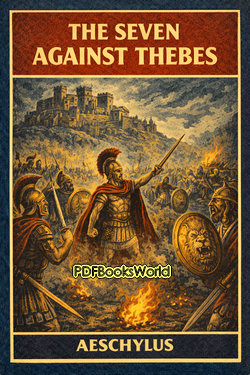
The Seven Against Thebes
by Aeschylus
A Tragic Clash of Fate, Family Curse, and War at the Gates of Ancient Thebes
Thunderous armies gather outside city walls while two brothers move toward a deadly confrontation neither can escape. The Seven Against Thebes by Aeschylus stands among the oldest surviving Greek tragedies, transforming a military siege into a powerful meditation on destiny, inherited guilt, and the destructive force of family conflict.
Written in the fifth century BCE, the play forms part of the larger mythological cycle surrounding the cursed royal house of Thebes.
The Curse Hanging Over Thebes
The tragedy grows out of the disastrous legacy of Oedipus, whose family became trapped within prophecy, shame, violence, and divine punishment.
After Oedipus leaves Thebes, his sons Eteocles and Polynices agree to alternate rule over the city. The arrangement collapses when Eteocles refuses to surrender power.
In response, Polynices returns leading seven warriors against the seven gates of Thebes, bringing civil war directly to the city’s walls.
The conflict becomes both political and deeply personal.
The Seven Gates and Their Champions
One of the play’s most dramatic features is its structure around the city’s gates. Each gate faces an attacking champion whose character and symbolism intensify the growing sense of doom.
The defenders of Thebes prepare carefully while fear spreads among the population.
The repeated announcements of approaching warriors create mounting tension and inevitability.
- Eteocles struggles to defend both city and authority
- Polynices returns demanding justice and power
- The attacking champions symbolize violence, pride, and destruction
- The Chorus expresses terror, grief, and civic anxiety
Every confrontation pushes the family closer to catastrophe.
War Beyond the Battlefield
Although armies dominate the plot, the play focuses less on combat spectacle and more on emotional and moral consequences.
Aeschylus explores how ambition, anger, and inherited curses destroy not only individuals but entire communities.
Thebes itself becomes a symbol of a society trapped beneath forces it cannot fully control.
The tragedy asks whether human beings can ever escape the consequences of past wrongdoing.
The Role of Fate in Greek Tragedy
Greek tragedy often portrays characters struggling against destinies already set into motion long before the story begins.
In The Seven Against Thebes, fate operates like a shadow hanging over every decision.
Even acts intended to preserve honor or justice contribute to destruction.
The play suggests that violence within families can continue across generations unless the cycle itself is broken.
The Power of Aeschylus’s Dramatic Style
Aeschylus writes with grandeur, ritual intensity, and powerful imagery. Speeches often feel ceremonial and prophetic rather than conversational.
The Chorus plays a major role, voicing fear, religious concern, and emotional reaction as disaster approaches.
The language creates a constant atmosphere of tension and approaching doom.
This combination of poetry and ritual helped shape the foundations of Western tragedy.
Why The Seven Against Thebes Still Matters
The Seven Against Thebes remains compelling because its themes continue to resonate far beyond ancient Greece. Family conflict, political struggle, inherited violence, and the fear of inevitable disaster remain deeply human concerns.
For readers interested in Greek mythology, classical drama, tragic literature, and ancient philosophy, Aeschylus’s play offers a powerful and haunting vision of war, destiny, and the destructive weight of unresolved conflict.
Similar Genres
About the Author
Aeschylus was one of the greatest playwrights of ancient Greece and is widely regarded as the father of Greek tragedy. Living during the fifth century BCE, he transformed theatre by introducing more complex characters, dramatic dialogue, and powerful storytelling. His plays explored timeless themes such as justice, fate, courage, family, and the relationship between human beings and the gods. Explore Aeschylus books to discover the author's life, literary career, and access notable works.