
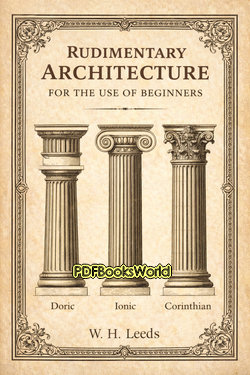
Rudimentary Architecture for the Use of Beginners
by W. H. Leeds
An Accessible Introduction to Architectural Principles and Design
Rudimentary Architecture for the Use of Beginners by W. H. Leeds is a practical educational guide intended to introduce students and general readers to the fundamental principles of architecture. Written during the nineteenth century, the book reflects a growing interest in technical education and the desire to make artistic and engineering knowledge accessible beyond professional circles.
The work presents architecture not merely as decoration, but as a disciplined combination of beauty, proportion, utility, engineering, and historical tradition. Leeds explains essential concepts in a clear and organized manner, helping beginners understand how buildings are planned, constructed, and aesthetically designed.
The volume blends architectural theory with practical instruction and historical overview.
The Foundations of Architectural Study
Rudimentary Architecture: The basic principles and essential knowledge required for understanding architectural design, construction, and structural form.
The book likely introduces topics such as proportion, symmetry, columns, arches, foundations, materials, ornamentation, floor planning, and the structural functions of walls, roofs, and supports.
Leeds may also discuss major architectural styles including Greek, Roman, Gothic, and Renaissance traditions while explaining how historical forms influenced modern building design.
The atmosphere combines educational clarity, technical precision, and artistic appreciation.
The Instructional Style of W. H. Leeds
W. H. Leeds writes in a methodical and accessible style designed specifically for beginners without advanced technical training. His prose reflects the educational ideals of nineteenth-century practical manuals aimed at self-improvement and professional instruction.
The language balances technical explanation with simplified examples and historical commentary.
Leeds’s organized presentation gives the work strong educational value and readability.
Main Themes and Artistic Reflection
The book explores themes of design, craftsmanship, engineering, artistic proportion, structural stability, historical tradition, education, practical skill, beauty, and the relationship between utility and aesthetics.
Through explanations of architectural principles, the work demonstrates how buildings reflect both technical necessity and cultural expression.
The study also encourages appreciation for architecture as a major achievement of civilization and artistic creativity.
Why the Book Still Holds Interest
Rudimentary Architecture for the Use of Beginners remains valuable because introductory manuals reveal how architecture was taught during a period of expanding industrialization, urban growth, and technical education.
The work also provides historical insight into architectural terminology, nineteenth-century design principles, and educational methods for aspiring architects and builders.
Its clear explanations and broad overview continue to make it informative for readers interested in architectural history.
The Lasting Importance of Architectural Education
Architecture has long been viewed as a discipline combining artistic vision with engineering skill. During the nineteenth century, increasing industrial development and urban expansion created growing demand for accessible technical education in building design and construction.
Instructional manuals helped spread architectural knowledge to students, craftsmen, and self-taught learners interested in both practical construction and artistic refinement.
The continuing fascination with architecture and design history helps preserve appreciation for works like this.
Final Thoughts
Rudimentary Architecture for the Use of Beginners by W. H. Leeds is a clear and educational introduction to the principles of architectural design, construction, and artistic proportion. Through accessible instruction and historical perspective, Leeds provides readers with a valuable foundation for understanding the technical and creative dimensions of architecture.
For readers interested in architecture, engineering history, design education, and nineteenth-century instructional literature, this work remains both informative and historically meaningful.
Similar Genres
About the Author
W. H. Leeds was a British architect, architectural writer, and educator who devoted much of his career to explaining the principles of architecture in a clear and practical manner. Explore W. H. Leeds books to discover the author's life, literary career, and access notable works.