
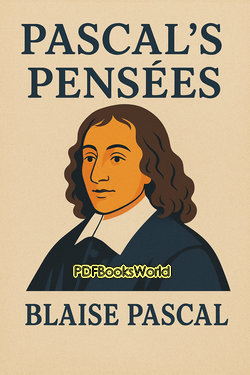
Pascal's Pensées
by Blaise Pascal
Why Pensées Still Challenges Modern Readers and Thinkers
Pensées by Blaise Pascal remains one of the most fascinating works in philosophy and religious thought. Rather than a traditional book with a clear narrative structure, the work is a collection of reflections, fragments, and observations about human nature, faith, reason, and existence. Although written in the seventeenth century, Pascal’s ideas continue to feel strikingly modern because they explore the emotional and intellectual struggles that people still experience today.
Readers interested in the philosophical importance of Pascal’s work can explore Encyclopaedia Britannica.
A Book Built From Fragments of Thought
Unlike many philosophical works, Pensées was never fully completed by Pascal before his death. The text survives as a series of notes and unfinished reflections that were later organized and published by editors. This fragmented structure gives the work an unusually personal and intimate feeling, as if readers are witnessing the private thoughts of a brilliant mind wrestling with difficult questions.
Pascal moves between philosophy, religion, psychology, and social criticism with remarkable intensity. One moment he reflects on human pride and weakness, while the next he examines reason, doubt, suffering, or the search for meaning in life.
The Conflict Between Reason and Faith
One of the central ideas in Pensées is the tension between rational thinking and religious belief. Pascal respected logic and mathematics deeply, yet he argued that human reason alone could never fully explain existence or spiritual truth. This balance between intellect and faith gives the work much of its philosophical depth.
His famous “Pascal’s Wager” remains one of the most discussed arguments in philosophy. Pascal suggests that believing in God may be the most reasonable choice because the potential gain is infinite while the possible loss is limited. Whether readers agree or disagree, the argument continues to provoke debate centuries later.
Pascal’s View of Human Nature
Throughout the book, Pascal presents a complex portrait of humanity. He believed human beings were capable of intelligence and greatness, yet also deeply vulnerable, insecure, and easily distracted. According to Pascal, people often avoid confronting difficult truths by filling their lives with entertainment, ambition, and endless activity.
These observations about distraction and emotional avoidance feel surprisingly modern in an age dominated by constant media and technology. Many readers are struck by how accurately Pascal describes anxiety, restlessness, and the human desire to escape uncomfortable thoughts.
The Literary Power of the Writing
Part of the lasting appeal of Pensées comes from Pascal’s writing style. His reflections are often short, sharp, and emotionally powerful. Rather than building long philosophical systems, he expresses ideas through memorable observations and striking contradictions.
This style makes the work accessible even when discussing difficult philosophical questions. Many passages feel poetic, combining emotional honesty with intellectual precision.
Additional insight into Pascal’s literary and intellectual legacy is available through the Stanford Encyclopedia of Philosophy.
Why the Work Still Feels Relevant
Modern readers continue to connect with Pensées because the book examines universal human concerns. Questions about purpose, mortality, doubt, happiness, and belief remain just as important today as they were during Pascal’s lifetime.
The work also appeals to readers who enjoy philosophy that feels personal rather than purely academic. Pascal writes not only as a thinker but as someone struggling emotionally and spiritually with the uncertainties of human existence.
A Lasting Intellectual Legacy
More than three centuries after its publication, Pensées remains one of the most influential works in philosophy and religious literature. Its exploration of faith, reason, human weakness, and the search for meaning continues to inspire debate among scholars, students, and general readers around the world. Blaise Pascal’s unfinished reflections still challenge readers to confront difficult questions about what it means to be human.
Similar Genres
About the Author
Blaise Pascal was a French mathematician, physicist, inventor, philosopher, and religious thinker whose extraordinary achievements placed him among the greatest intellectual figures of the seventeenth century. Explore Blaise Pascal books to discover the author's life, literary career, and access notable works.