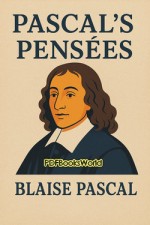
Blaise Pascal
Blaise Pascal was a French mathematician, physicist, inventor, philosopher, and religious thinker whose extraordinary achievements placed him among the greatest intellectual figures of the seventeenth century. A child prodigy, Pascal made groundbreaking contributions to geometry, probability theory, fluid mechanics, and the development of early calculating machines before turning much of his attention to philosophy and theology. His writings explore the relationship between reason and faith, the limits of human knowledge, and the search for meaning in an uncertain world. Combining scientific brilliance with profound spiritual reflection, Pascal produced works that continue to influence philosophy, mathematics, theology, and literature more than three centuries after their creation.
Reason, Faith, and the Human Condition
Pascal believed that human beings possess remarkable intellectual abilities yet remain limited in their understanding of life's deepest mysteries. His philosophical writings examine the nature of belief, happiness, justice, morality, and the tension between rational thought and spiritual experience. Rather than presenting simple answers, he invites readers to confront questions about existence, purpose, and the complexities of the human heart. His reflections encourage humility, self-examination, and an appreciation of both logical inquiry and personal faith, making his work enduringly relevant to readers from diverse philosophical and religious backgrounds.
Profound Ideas Expressed with Remarkable Clarity
Blaise Pascal wrote in a concise, elegant, and deeply reflective style that combines philosophical precision with literary beauty. His observations are often presented as brief meditations, memorable aphorisms, and carefully reasoned arguments that reward repeated reading. Although many of his ideas are intellectually challenging, his vivid language and penetrating insights make them accessible to thoughtful readers. This distinctive style has secured his reputation as one of the finest prose writers in the French language and one of history's most influential philosophical authors.
Notable Works
- Pensées – His celebrated collection of philosophical and theological reflections.
- Provincial Letters – A series of influential letters defending religious and moral principles.
- Treatise on the Arithmetical Triangle – A foundational mathematical work on probability and combinatorics.
- Essay on Conic Sections – An early contribution to the study of projective geometry.
- De l'Esprit Géométrique (On the Geometrical Mind) – A philosophical essay on reasoning and scientific method.
A Timeless Philosophical Classic in Our Library
Pascal's Pensées is a remarkable collection of reflections assembled from Blaise Pascal's unfinished notes for a proposed defense of the Christian faith. Covering subjects such as human nature, reason, belief, doubt, morality, happiness, suffering, and the search for truth, the work combines philosophical inquiry with spiritual contemplation in a series of thought-provoking fragments. Among its most famous ideas is "Pascal's Wager," a philosophical argument concerning belief and uncertainty that continues to inspire discussion today. Rich in intellectual depth and literary elegance, Pensées remains one of the greatest works of philosophical literature, inviting readers to reflect upon the enduring questions of existence and the nature of the human condition.
An Enduring Legacy in Philosophy and Science
Blaise Pascal is remembered as one of history's most brilliant minds, whose achievements transformed mathematics, physics, philosophy, and religious thought. His writings continue to inspire philosophers, scientists, theologians, and general readers through their remarkable blend of intellectual rigor, spiritual insight, and literary excellence. PDF Books World has carefully curated digital editions of his enduring works, allowing modern readers to explore the timeless wisdom and profound reflections of one of the greatest thinkers of the modern age.