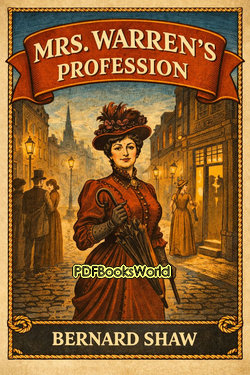
Mrs. Warren's Profession
by Bernard Shaw
A Bold and Controversial Drama About Society, Morality, and Economic Survival
Mrs. Warren’s Profession by George Bernard Shaw is one of the most provocative and socially critical plays of modern drama. Written during the late nineteenth century, the play examines poverty, social hypocrisy, women’s independence, and the economic realities that shape personal choices. Shaw uses sharp dialogue and emotional conflict to challenge traditional moral judgments and expose the inequalities hidden beneath respectable society.
Because of its controversial subject matter, the play faced censorship and public criticism when it first appeared. Today, it is recognized as one of Shaw’s most important social dramas.
The Conflict Between Mother and Daughter
The story centers on Vivie Warren, an intelligent and independent young woman who discovers disturbing truths about the source of her mother’s wealth. Mrs. Warren, who has built financial success through morally controversial means, defends her choices by explaining the harsh economic conditions faced by women with limited opportunities.
As mother and daughter confront one another, the play becomes a powerful debate about morality, survival, class inequality, and personal freedom.
The emotional tension between the two women drives the drama throughout the play.
Main Characters
- Mrs. Kitty Warren, a successful but controversial businesswoman shaped by poverty and survival
- Vivie Warren, her educated and independent daughter struggling with questions of morality and identity
- Sir George Crofts, a wealthy and morally questionable associate
- Frank Gardner, charming but financially unreliable
These characters represent different attitudes toward money, morality, social status, and personal independence.
Shaw’s Criticism of Society
One of the play’s most important achievements is its criticism of social hypocrisy. Shaw argues that society often condemns individuals for immoral actions while ignoring the economic systems and inequalities that force people into difficult situations.
Rather than portraying Mrs. Warren simply as immoral, Shaw presents her as someone shaped by poverty, limited opportunity, and social injustice. The play asks whether society itself shares responsibility for the conditions it publicly condemns.
This complex moral perspective made the play highly controversial for its time.
Main Themes Explored in the Play
- Economic inequality and limited opportunities for women
- Social hypocrisy and moral judgment
- Independence, education, and personal freedom
- The conflict between family loyalty and individual values
These themes continue to make the play socially relevant and intellectually challenging.
The Writing Style of George Bernard Shaw
Shaw writes with intelligence, wit, and sharp social observation. His dialogue feels lively and argumentative, allowing characters to debate political, moral, and economic ideas naturally within dramatic conversation.
Rather than offering simple heroes or villains, Shaw creates morally complex characters whose motivations reflect larger social realities.
The combination of humor, realism, and social criticism helped establish Shaw as one of the most important playwrights of modern theater.
Why Mrs. Warren’s Profession Still Matters
Mrs. Warren’s Profession remains powerful because it continues to raise difficult questions about morality, poverty, gender inequality, and economic survival. Many of the social issues Shaw explored still exist in modern society.
For readers interested in social drama, feminist themes, political theater, and classic literature, George Bernard Shaw’s play remains a bold and thought-provoking work that continues to inspire discussion and debate.
Similar Genres
About the Author

Bernard Shaw, born George Bernard Shaw, was an Irish playwright, critic, essayist, and social thinker whose brilliant wit and fearless intellect made him one of the greatest dramatists of the modern era. Born in Dublin in 1856, Shaw moved to London, where he developed a distinguished literary career that spanned more than six decades. Explore Bernard Shaw books to discover the author's life, literary career, and access notable works, including Arms and the Man, Pygmalion , and more.