
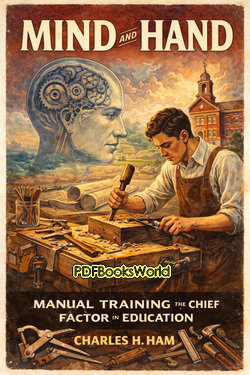
Mind and Hand: Manual Training the Chief Factor in Education
by Charles H. Ham
An Influential Argument for Learning Through Practical Experience
Mind and Hand: Manual Training the Chief Factor in Education by Charles H. Ham is a pioneering educational work that advocates the importance of manual training as a fundamental part of learning. Written during a period of significant industrial and social change, the book argues that education should develop both intellectual and practical abilities. Ham contends that true learning occurs when the mind and the hand work together, combining knowledge with action.
The book played an important role in discussions about educational reform, particularly regarding the value of vocational skills, craftsmanship, and hands-on instruction. Its ideas influenced educators who sought to create a more balanced and effective approach to teaching.
The Meaning of Manual Training
Manual training refers to educational activities that involve practical work, such as woodworking, drawing, construction, and the use of tools. Ham believed these activities were not merely vocational exercises but valuable methods of developing observation, reasoning, discipline, and creativity.
According to the author, students learn more effectively when they apply ideas through direct experience. Practical work strengthens understanding by transforming abstract concepts into tangible results.
Education Beyond Memorization
One of Ham's central arguments is that education should extend beyond the memorization of facts. While academic knowledge remains important, he maintains that students also need opportunities to develop practical judgment and problem-solving skills.
By engaging in constructive activities, learners gain confidence, patience, and a deeper appreciation for the relationship between thought and action. This approach encourages active participation rather than passive learning.
Key Topics Covered
- Manual Training: The educational value of practical skills.
- Educational Reform: Improving traditional teaching methods.
- Skill Development: Building both mental and physical abilities.
- Industrial Education: Preparing students for a changing world.
- Learning by Doing: Applying knowledge through experience.
The Connection Between Mind and Hand
The title itself expresses the book's central idea. Ham argues that intellectual growth and practical activity should support one another. The mind plans and understands, while the hand applies and creates. Together, they form a complete educational process.
This philosophy challenged educational systems that focused almost entirely on classroom instruction and theoretical study. Ham believed a balanced approach would produce more capable and well-rounded individuals.
Major Themes
- Practical Learning: Knowledge becomes meaningful through application.
- Creativity: Constructive work encourages innovation and imagination.
- Self-Development: Education should strengthen character and ability.
- Balance: Intellectual and practical skills are equally important.
- Progress: Schools must adapt to changing social and economic needs.
Historical Significance
During the late nineteenth century, industrialization transformed many aspects of society. Educators increasingly debated how schools should prepare students for modern life. Ham's work contributed significantly to these discussions by promoting manual training as an essential educational tool.
Many of his ideas influenced later developments in vocational education, technical schools, and experiential learning programs that continue to exist today.
Why the Book Remains Relevant
Mind and Hand: Manual Training the Chief Factor in Education remains valuable because its core principles continue to resonate in modern education. Contemporary teaching methods often emphasize project-based learning, practical experience, and the integration of theory with practice.
For readers interested in educational history, teaching philosophy, and learning theory, the book provides a thoughtful examination of how practical activity can enhance intellectual growth. Ham's vision of education as a partnership between thinking and doing remains both influential and inspiring.
Similar Genres
About the Author
Charles H. Ham was an American educator, writer, and advocate of manual training whose work helped shape educational thought during the late nineteenth century. He believed that education should develop both intellectual ability and practical skill, arguing that learning through craftsmanship and hands-on experience prepared students for productive lives. Explore Charles H. Ham books to discover the author's life, literary career, and access notable works.