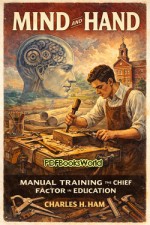
Charles H. Ham
Charles H. Ham was an American educator, writer, and advocate of manual training whose work helped shape educational thought during the late nineteenth century. He believed that education should develop both intellectual ability and practical skill, arguing that learning through craftsmanship and hands-on experience prepared students for productive lives. His writings influenced discussions about industrial education, vocational instruction, and the role of practical training in schools at a time of rapid technological and social change.
Educational Career
Charles H. Ham devoted much of his career to promoting educational reform through the integration of manual training into school curricula. He argued that practical work with tools and materials strengthened observation, discipline, creativity, and problem-solving just as effectively as traditional academic study. His educational philosophy reflected the growing recognition that schools should prepare students for both intellectual pursuits and the practical demands of modern society.
Through lectures and publications, Ham encouraged educators to view manual training not simply as vocational preparation but as an essential part of a well-rounded education.
Writing Style and Educational Philosophy
Ham wrote in a clear, persuasive, and thoughtful style that combined educational theory with practical examples. His works explored themes such as learning by doing, character development, craftsmanship, industrial education, and the relationship between knowledge and practical experience. Rather than presenting manual training as separate from academic learning, he argued that the two complemented one another in developing capable, confident, and responsible individuals.
This balanced approach helped make his educational ideas accessible to teachers, school administrators, policymakers, and parents alike.
Contributions to Educational Reform
Charles H. Ham made an important contribution to educational literature by advocating for instructional methods that combined intellectual growth with practical skill. His ideas influenced the expansion of manual training programs and helped lay the foundation for later developments in vocational and technical education. Although educational practices have evolved, many of his principles regarding experiential learning continue to resonate in modern classrooms.
His work remains valuable for understanding the history of educational reform and the development of practical learning in schools.
Enduring Legacy
Charles H. Ham is remembered as a thoughtful educational reformer who championed the importance of learning through experience. His book Mind and Hand: Manual Training the Chief Factor in Education reflects his belief that intellectual development and practical skill should progress together in the education of every student. Today, this public domain work continues to interest readers exploring the history of education, vocational training, teaching philosophy, and the enduring value of hands-on learning.