
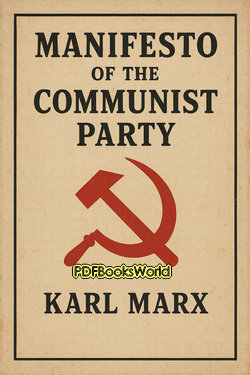
Manifesto of the Communist Party
by Karl Marx
The Communist Manifesto and the Power of Labor
Manifesto of the Communist Party, commonly known as The Communist Manifesto, is one of the most influential political writings in modern history. Written by Karl Marx and Friedrich Engels and published in 1848, the book explains the ideas of communism, class struggle, and the relationship between workers and capitalism.
Although it was written in the nineteenth century, the manifesto continues to be discussed in politics, economics, sociology, and history around the world.
What Is the Book About?
The manifesto was created as a political pamphlet for the Communist League. Marx and Engels wrote it to explain the goals of communism and to encourage workers to unite against systems they believed were unfair and exploitative.
The book argues that throughout history, societies have been divided into social classes that often compete for power and wealth. According to the authors, modern industrial society created two major classes:
- The Bourgeoisie – the wealthy class that owns businesses and industries
- The Proletariat – the working class that sells labor for wages
Marx and Engels believed that conflict between these classes would eventually lead to major social and political change.
The Main Ideas of the Manifesto
One of the central ideas in the book is that history is shaped by class struggle. The authors argue that economic systems influence politics, culture, and society. They believed capitalism created wealth and industrial growth, but also caused inequality and exploitation of workers.
The manifesto predicts that workers would eventually unite and challenge the capitalist system. Marx and Engels imagined a future society without social classes, where resources and production would be shared more equally.
Criticism of Capitalism
The book presents a strong criticism of capitalism and industrial society. Marx and Engels argued that factory workers often faced poor working conditions, low wages, and economic insecurity while wealthy business owners gained most of the profits.
At the same time, the authors also recognized that capitalism helped create technological progress, global trade, and industrial development. This balance of criticism and analysis makes the manifesto an important historical document.
Famous Quotes and Influence
The manifesto contains several famous lines that are still widely recognized today. One of the best-known openings is:
“A spectre is haunting Europe — the spectre of communism.”
The book also ends with the famous call:
“Workers of the world, unite!”
These phrases became symbols of political movements and labor activism across many countries.
Historical Importance
The Communist Manifesto became one of the most influential political texts ever published. Its ideas shaped socialist and communist movements during the nineteenth and twentieth centuries and influenced revolutions, governments, political parties, and labor unions around the world.
Even people who disagree with its ideas often study the book because of its historical and intellectual importance.
Writing Style and Structure
The manifesto is relatively short but filled with strong arguments and political analysis. The writing style is direct, passionate, and persuasive. Instead of telling a fictional story, the book focuses on social theory, economics, and political ideas.
Because of its clear language and powerful message, the manifesto remains widely read by students, historians, economists, and political thinkers.
Why People Still Read It Today
Modern readers continue to study the book because many of its topics remain relevant. Discussions about wealth inequality, workers’ rights, economic systems, and social justice still appear in political debates around the world.
Whether readers agree or disagree with Marx and Engels, the manifesto remains an important work for understanding modern political history and economic thought.
Final Thoughts
Manifesto of the Communist Party by Karl Marx and Friedrich Engels is more than a political pamphlet. It is a historical document that changed political discussions across the globe and introduced ideas that continue to influence society today.
For readers interested in politics, history, economics, or social theory, this classic work remains an essential and thought-provoking read.
Similar Genres
About the Author
Karl Marx was a German philosopher, economist, historian, political theorist, journalist, and revolutionary socialist whose ideas profoundly shaped modern political thought and social science. Born in Trier in 1818, Marx devoted his life to analyzing the forces that drive economic systems, class relations, and historical change. Explore Karl Marx books to discover the author's life, literary career, and access notable works.