Karl Marx
Karl Marx was a German philosopher, economist, historian, political theorist, journalist, and revolutionary socialist whose ideas profoundly shaped modern political thought and social science. Born in Trier in 1818, Marx devoted his life to analyzing the forces that drive economic systems, class relations, and historical change. Working closely with Friedrich Engels, he developed a comprehensive critique of capitalism and proposed theories that influenced political movements, economics, sociology, history, and philosophy across the globe. Whether admired or criticized, Marx remains one of the most influential and widely studied thinkers in modern intellectual history.
Examining Society Through History and Economics
Karl Marx believed that economic structures profoundly influenced politics, culture, and social relationships. His writings explored the dynamics of labor, capital, class struggle, and historical development, arguing that material conditions shaped the evolution of societies. Combining philosophy, economics, and historical analysis, Marx challenged readers to examine the relationship between wealth, production, and social organization. His works continue to inspire scholarly debate and remain essential reading for students of political economy, sociology, history, and philosophy.
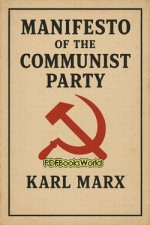
The Communist Manifesto, co-authored with Friedrich Engels, is Marx's most widely recognized work. First published in 1848, it presents a concise analysis of class conflict, capitalism, and social change while outlining the principles of communism. Although brief in length, it has become one of the most influential political documents ever written, shaping political movements and intellectual discussions around the world.
Essential Works
- The Communist Manifesto outlines the principles of communism while examining class struggle, capitalism, and the historical forces shaping society.
- Das Kapital is Marx's monumental critique of political economy, analyzing capitalism, labor, value, production, and the accumulation of capital.
- The Eighteenth Brumaire of Louis Bonaparte explores the political events surrounding the rise of Napoleon III while examining history, power, and class politics.
- A Contribution to the Critique of Political Economy develops many of Marx's foundational ideas on economics, production, exchange, and historical materialism.
- The Civil War in France analyzes the Paris Commune of 1871, discussing democracy, revolution, and the role of the working class in political change.
An Enduring Legacy in Political and Economic Thought
Karl Marx's writings continue to shape academic research and public debate through their far-reaching analysis of economics, history, and society. From The Communist Manifesto and Das Kapital to The Eighteenth Brumaire of Louis Bonaparte, A Contribution to the Critique of Political Economy, and The Civil War in France, his works remain foundational texts in political philosophy and the social sciences. His enduring legacy continues to influence discussions on economics, labor, social justice, and historical development, making him one of the most significant thinkers of the modern era.
If you enjoy political philosophy, economics, history, sociology, and influential works of social theory, the writings of Karl Marx are well worth exploring. At PDFBooksWorld, you can discover a carefully curated collection of his enduring works and examine the ideas that have shaped intellectual and political discourse for more than a century.