
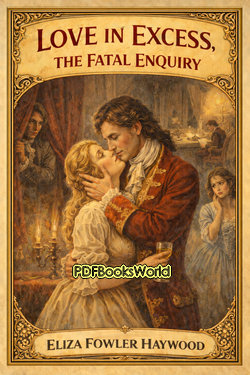
Love in Excess
by Eliza Fowler Haywood
When Passion Challenges Society
Love in Excess by Eliza Fowler Haywood is one of the most influential novels of the early eighteenth century and helped establish its author as a major figure in English literature. First published in parts between 1719 and 1720, the novel captivated readers with its blend of romance, intrigue, emotional conflict, and social observation. At a time when fiction was still developing as a literary form, Haywood created a story that explored the complexities of desire and the consequences of allowing passion to dominate reason.
The novel focuses on the emotional entanglements of aristocratic society, where love, reputation, and ambition often collide in dramatic ways.
Characters
- Count D'Elmont: A handsome nobleman whose romantic relationships drive much of the plot.
- Amena: A young woman whose affection for D'Elmont leads to significant consequences.
- Alovisa: An intelligent and determined woman whose love becomes increasingly complicated.
- Melliora: A virtuous and admired young woman whose presence influences the course of several relationships.
- Baron D'Espernay: A nobleman whose actions contribute to the novel's romantic and social intrigues.
A Web of Romantic Intrigue
The story unfolds through a series of misunderstandings, secret affections, mistaken assumptions, and emotional revelations. D'Elmont finds himself pursued by admirers while struggling to understand his own feelings. Letters, concealed emotions, and unexpected encounters create an atmosphere of uncertainty that keeps the narrative moving.
Rather than presenting love as simple or predictable, Haywood depicts it as a powerful force capable of inspiring both happiness and suffering.
The Novel's Exploration of Emotion
One reason for the book's popularity was its intense focus on emotional experience. Haywood invites readers into the inner lives of her characters, examining jealousy, longing, hope, disappointment, and devotion. This attention to feeling distinguished her work from many earlier narratives and helped shape the development of the English novel.
The emotional depth of the characters remains one of the work's most notable qualities.
Ideas That Run Through the Story
Love and Desire: Romantic attraction motivates many of the characters' choices.
Reputation: Social standing and public opinion play a crucial role in aristocratic life.
Virtue and Temptation: Characters must balance personal desires against moral and social expectations.
Power of Emotion: Feelings frequently influence decisions more strongly than logic or caution.
Women at the Center of the Narrative
An important feature of the novel is its attention to female perspectives. Haywood gives significant space to the thoughts, desires, and struggles of her women characters. Their experiences reveal the opportunities and limitations faced by women within the society of the period.
This focus contributed to Haywood's reputation as a pioneering female novelist whose works addressed subjects often overlooked by other writers of her time.
Style and Literary Importance
The prose is lively, dramatic, and filled with emotional intensity. Haywood's ability to sustain suspense through romantic complications helped attract a wide readership. Her work also influenced later writers who explored themes of courtship, social expectations, and personal desire.
Today, literary historians regard Love in Excess as an important milestone in the evolution of popular fiction and women's writing.
Lasting Appeal
Modern readers continue to find value in the novel because it combines engaging storytelling with insight into early eighteenth-century society. Its memorable characters, emotional conflicts, and examination of love's power provide a fascinating glimpse into the literary tastes and cultural concerns of its era.
Love in Excess remains a significant and entertaining work that showcases Eliza Haywood's skill in portraying the joys, dangers, and complexities of human affection.
Similar Genres
About the Author
Eliza Fowler Haywood, widely known as Eliza Haywood, was one of the most influential English novelists, playwrights, actresses, and publishers of the eighteenth century. A prolific writer during the early development of the English novel, she helped shape popular fiction through her vivid storytelling, psychological insight, and exploration of love, desire, and social expectations. Explore Eliza Fowler Haywood books to discover the author's life, literary career, and access notable works.