Kelly Miller
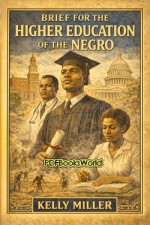
Kelly Miller was an American mathematician, sociologist, educator, and author whose influential writings helped shape discussions on education, civil rights, and racial equality during the late nineteenth and early twentieth centuries. As one of the leading African American intellectuals of his generation, Miller combined academic scholarship with public advocacy, encouraging educational opportunities and social progress for Black Americans. Throughout his long career at Howard University, he inspired students and contributed to national debates on race, education, and public policy. His work Brief for the Higher Education of the Negro reflects his firm belief that advanced education was essential for individual achievement and the broader advancement of society.
A Scholar Dedicated to Education
Kelly Miller's academic journey was remarkable for its time. After excelling in mathematics and science, he became one of the first African Americans to pursue advanced studies in mathematics at Johns Hopkins University. Although racial barriers limited many opportunities available to him, Miller remained committed to education as both a personal calling and a means of social transformation. He later joined the faculty of Howard University, where he taught mathematics, sociology, and economics while mentoring generations of students. His leadership helped strengthen the university's reputation as an important center of higher learning.
An Influential Voice for Equality
Beyond the classroom, Miller became one of the nation's most respected commentators on race relations and educational reform. Through books, essays, and newspaper articles, he examined the challenges facing African Americans in the decades following Reconstruction. He believed that education at every level, particularly higher education, was essential for developing leadership, professional expertise, and economic independence. While he sometimes differed from other prominent leaders of his era on the best strategies for progress, his arguments were consistently grounded in reason, scholarship, and a desire to expand opportunities for future generations.
Writing with Clarity and Purpose
Miller's writing combined careful analysis with accessible language, allowing both scholars and general readers to engage with important social issues. He addressed topics such as education, citizenship, economic advancement, and racial justice with balance and intellectual rigor. In Brief for the Higher Education of the Negro, he presents a thoughtful case for expanding access to advanced education, arguing that universities play a vital role in cultivating teachers, scientists, professionals, and civic leaders. Today, the work remains valuable as a historical document illustrating educational debates during a pivotal period in American history.
Notable Works
- Brief for the Higher Education of the Negro – A reasoned defense of higher education as a foundation for leadership and social progress.
- Race Adjustment – Examines race relations and proposes thoughtful approaches to social and educational advancement.
- Out of the House of Bondage – A collection of essays reflecting on freedom, citizenship, and the future of African Americans.
- As to the Leopard's Spots – Discusses racial identity, equality, and public policy in early twentieth-century America.
- The Everlasting Stain – Explores racial prejudice and advocates justice through reasoned public discourse.
An Enduring Legacy
Kelly Miller is remembered as one of the most important African American scholars and public intellectuals of his time. His contributions to mathematics, sociology, education, and civil rights continue to be studied for their historical significance and thoughtful analysis. By championing higher education and encouraging informed public discussion, he helped shape conversations that influenced generations of educators, students, and policymakers. Visitors to PDF Books World can explore Miller's public domain writings to discover the enduring ideas of a scholar whose commitment to education, equality, and intellectual achievement continues to inspire readers today.