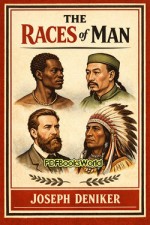
Joseph Deniker
Joseph Deniker was a French anthropologist, naturalist, and librarian who made significant contributions to the study of human diversity during the late nineteenth and early twentieth centuries. He devoted much of his career to understanding the physical characteristics, origins, and distribution of human populations around the world. At a time when anthropology was developing as a scientific discipline, Deniker carefully gathered information from many regions and attempted to organize it into a systematic study. Although some of his classifications reflect the scientific knowledge and assumptions of his era and are no longer accepted today, his work played an important role in the early history of anthropology and helped encourage further research into human societies and cultures.
Studying Human Diversity
Joseph Deniker believed that understanding humanity required careful observation and detailed research. He examined differences in physical appearance, geography, language, and historical migration, hoping to explain how populations had developed over time. His studies brought together information from explorers, historians, and scientists, making his books valuable references during his lifetime. While modern anthropology places far greater emphasis on genetics, culture, and the shared origins of humanity, Deniker's work remains important as an example of how the field evolved through continued research and improved scientific understanding.
Contributions to Anthropology
Deniker's writing reflected a strong commitment to scientific investigation. He organized large amounts of information into clear descriptions that helped readers compare different populations and regions. His work encouraged scholars to examine human history through evidence rather than speculation, contributing to the growth of anthropology as an academic discipline. Although many of his theories have since been revised or replaced by modern research, his efforts helped establish a foundation for future studies of human biology, migration, and cultural development.
A Careful and Informative Writing Style
One of Deniker's strengths was his ability to present complex scientific information in an organized and understandable way. He explained his observations with detailed descriptions and supported his ideas with examples from different parts of the world. His books were written for students, researchers, and readers interested in learning about human history and diversity. Even today, they provide valuable insight into the development of anthropology and the changing nature of scientific thought over time.
Essential Works
- The Races of Man – A comprehensive study of human diversity based on the anthropological knowledge available during Deniker's time.
- The Human Species – An examination of human origins, physical characteristics, and classification from an early anthropological perspective.
A Legacy in the History of Science
Joseph Deniker's work is best understood as part of the history of anthropology rather than as a reflection of current scientific knowledge. His research illustrates how scientific ideas develop and change as new evidence becomes available. By collecting information from many different sources and encouraging systematic study, he contributed to the growth of anthropology as a respected field of research. His books remain valuable for readers who wish to understand the history of scientific inquiry and the evolution of ideas about human diversity.
Readers interested in anthropology, the history of science, and the development of human studies can explore The Races of Man at PDF Books World. The carefully prepared edition preserves Joseph Deniker's influential work as an important historical document, allowing modern readers to examine the ideas that helped shape the early development of anthropology while understanding them within their historical context.