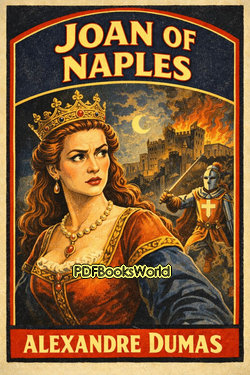
Joan of Naples
by Alexandre Dumas
A Dramatic Historical Portrait of Power, Passion, and Political Turmoil
Joan of Naples by Alexandre Dumas is a vivid historical narrative centered on Queen Joanna I of Naples, one of the most controversial and tragic female rulers of medieval Europe. Combining royal intrigue, political conspiracy, romance, betrayal, war, and dynastic conflict, Dumas presents a turbulent world where personal relationships and political survival become dangerously intertwined.
The work transforms medieval history into emotionally charged drama filled with ambition, suspicion, and shifting alliances.
A Queen Struggles to Hold Power
Joan ascends to the throne of Naples while still young, inheriting not only royal authority but also an unstable political environment filled with rival claimants, ambitious nobles, foreign threats, and court conspiracies.
Her reign quickly becomes surrounded by scandal and suspicion, especially after the mysterious murder of her husband, Andrew of Hungary.
As accusations spread and political enemies gather strength, Joan must navigate dangerous diplomatic struggles while attempting to preserve both her throne and personal reputation.
Wars, betrayals, marriages, and shifting loyalties gradually intensify the instability surrounding her rule.
Dumas portrays Joan as a figure caught between emotional vulnerability and the brutal demands of political leadership.
The Figures Within the Historical Drama
- Joan of Naples: A charismatic and emotionally complex queen struggling to survive political chaos and public suspicion.
- Andrew of Hungary: Joan’s husband whose violent death becomes the center of scandal and conflict.
- The Noble Factions and Rivals: Aristocratic forces competing for influence, revenge, and political control.
- The Foreign Powers and Claimants: External rulers and dynasties seeking advantage within Naples’s instability.
The tension between personal emotion and royal duty shapes the entire narrative.
Power, Reputation, and Female Authority
One of the novel’s strongest ideas is the fragility of political legitimacy, especially for a female ruler operating within a violent and male-dominated world.
Dumas explores how rumor, scandal, and public perception become weapons as dangerous as armies or assassins.
Joan’s personal life repeatedly becomes inseparable from political judgment, making love, marriage, and emotional loyalty matters of state survival.
The story reveals how quickly admiration can transform into suspicion within unstable political systems.
Major Themes Running Through the Narrative
- Political Intrigue and Conspiracy: Hidden plots and rival ambitions threaten the stability of the kingdom.
- Power and Vulnerability: Joan’s royal authority exists alongside emotional and political insecurity.
- Scandal and Reputation: Public suspicion shapes political destiny and personal tragedy.
- Love and Betrayal: Emotional relationships become entangled with ambition and violence.
Dumas’s Passion for Historical Drama
Joan of Naples demonstrates Alexandre Dumas’s gift for transforming historical biography into dramatic literary narrative. He emphasizes emotional conflict, atmosphere, suspense, and vivid characterization rather than dry historical detail.
The medieval setting becomes alive through scenes of court ceremony, conspiracy, military tension, and personal confrontation.
Dumas portrays history as a world driven by powerful emotions as much as political calculation.
Why the Story Still Fascinates Readers
Modern readers continue finding Joan of Naples compelling because its themes remain timeless. Questions of political legitimacy, gender and power, public scandal, betrayal, and leadership under pressure continue resonating strongly today.
The dramatic life of Joan herself also provides extraordinary material for emotional and political storytelling.
For readers interested in medieval history, royal intrigue, tragic queens, and richly emotional historical fiction, this work remains vivid, suspenseful, and deeply engaging.
Similar Genres
About the Author

Alexandre Dumas captivated readers with thrilling adventures, unforgettable heroes, and stories that have stood the test of time. Born in France in 1802, he possessed an extraordinary gift for weaving history, romance, and action into novels that appealed to readers of every age. Explore Alexandre Dumas books to discover the author's life, literary career, and access notable works, including The Count of Monte Cristo, The Three Musketeers, The Royal Life Guard, The Man in the Iron Mask , and more.