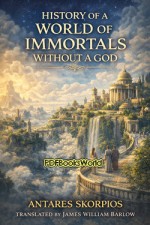
James William Barlow
James William Barlow was an Irish physician, scientist, and novelist whose writings combined scientific curiosity with philosophical imagination. Best remembered for his speculative fiction, Barlow explored profound questions about human existence, morality, society, and the future through imaginative narratives rather than conventional storytelling. His work reflects the intellectual climate of the late nineteenth century, when rapid advances in science encouraged writers to examine humanity's place in the universe from new perspectives. History of a World of Immortals without a God stands as his most notable literary achievement, presenting a thought-provoking vision of civilization that challenges readers to reflect on faith, ethics, and the meaning of immortality.
Blending Science and Philosophy
James William Barlow approached fiction as a means of exploring ideas that extended beyond the limits of everyday experience. Drawing upon his scientific background, he imagined societies shaped by different natural laws and moral principles, encouraging readers to consider how humanity might evolve under extraordinary circumstances. Rather than relying solely on adventure or fantasy, his novels invite reflection on questions concerning life, consciousness, and the foundations of civilization.
His ability to unite scientific reasoning with imaginative storytelling distinguished his work from many other novels of the period. Readers encountered fictional worlds that entertained while also presenting opportunities to examine enduring philosophical debates.
A Thoughtful Literary Style
Barlow's writing is characterized by careful reasoning, descriptive clarity, and intellectual depth. He developed his fictional settings with logical consistency, allowing readers to engage with unfamiliar concepts through well-structured narratives and thoughtful dialogue. His prose remains accessible despite addressing complex philosophical themes, making his work appealing to readers interested in both literature and ideas.
Instead of emphasizing dramatic action alone, Barlow devoted considerable attention to the beliefs, institutions, and social structures of the civilizations he imagined. This method created stories that functioned as both entertaining fiction and philosophical exploration.
Exploring Humanity Beyond Conventional Beliefs
A recurring feature of Barlow's work is his willingness to question accepted assumptions about morality, religion, and human destiny. He examined how societies might develop if guided by different ethical systems or if fundamental aspects of human life were transformed. His speculative approach encouraged readers to compare fictional civilizations with their own world and to reflect upon the principles that sustain communities.
History of a World of Immortals without a God exemplifies these themes by presenting an imagined society where immortality exists independently of traditional religious belief. Through this unusual premise, the novel explores the consequences of eternal life, social organization, personal responsibility, and the search for meaning in a world shaped by reason rather than divine authority.
Literary Contribution
Although James William Barlow wrote relatively few works of fiction, his imaginative vision places him among the early pioneers of philosophical and speculative literature. His novels anticipated later developments in science fiction by emphasizing ideas, social structures, and intellectual inquiry over sensational adventure. His willingness to examine complex philosophical questions through fictional settings helped broaden the possibilities of imaginative literature.
Modern readers continue to value his work for its originality and its ability to stimulate thoughtful discussion. His novels remain fascinating examples of speculative fiction that encourage readers to consider alternative perspectives on humanity, ethics, and civilization.
A Lasting Legacy in Speculative Fiction
James William Barlow's writings continue to attract readers interested in classic science fiction, philosophical novels, and imaginative explorations of society. His thoughtful blend of scientific reasoning, moral inquiry, and creative storytelling gives his work a distinctive place in literary history. Long after its original publication, his fiction continues to inspire readers to reflect on questions that remain relevant in every generation.
PDF Books World preserves carefully curated editions of James William Barlow's public domain works, allowing modern audiences to discover an author whose imaginative vision expanded the boundaries of speculative fiction and encouraged deeper reflection on the enduring questions of human existence.