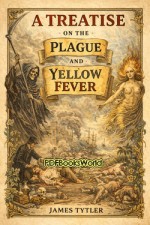
James Tytler
James Tytler was a Scottish writer, editor, translator, inventor, and physician whose remarkably varied career reflected the intellectual curiosity of the eighteenth century. He contributed to scientific, medical, and literary fields while becoming one of the early contributors to the Encyclopædia Britannica. Tytler wrote on subjects ranging from medicine and chemistry to engineering and history, always striving to make knowledge accessible to a wider audience. A Treatise on the Plague and Yellow Fever demonstrates his interest in public health and his efforts to explain some of the most feared epidemic diseases of his time.
A Scholar of Many Disciplines
James Tytler belonged to an era when scholars frequently pursued knowledge across multiple fields rather than specializing in a single discipline. His work as a physician informed his medical writings, while his experience as an editor and translator enabled him to communicate complex subjects with clarity. Beyond medicine, he also gained recognition for scientific experimentation and became the first person in Britain to make a successful ascent in a hot-air balloon.
His diverse accomplishments illustrate the spirit of inquiry that characterized the Enlightenment, when advances in science, medicine, and technology were transforming society.
Examining Epidemic Diseases
In A Treatise on the Plague and Yellow Fever, Tytler discusses two of the most devastating infectious diseases known during the eighteenth century. Drawing upon the medical knowledge available at the time, he examines their symptoms, patterns of spread, possible causes, and methods of prevention and treatment. Although many of his conclusions have been superseded by modern medical science, the work provides valuable insight into how physicians sought to understand and respond to epidemics before the development of germ theory and modern microbiology.
The book remains significant as a historical document, illustrating the evolution of medical thinking and the challenges faced by healthcare practitioners confronting widespread disease with limited scientific knowledge.
Popular Works
- A Treatise on the Plague and Yellow Fever – A historical study examining epidemic diseases through the medical understanding of the eighteenth century.
- Contributions to Encyclopædia Britannica – Numerous articles covering science, medicine, engineering, and general knowledge.
- Elements of General History – A survey of historical events designed for educational purposes.
- Essays on Chemistry and Natural Philosophy – Writings exploring scientific ideas and practical applications.
- Medical and Scientific Treatises – A collection of works reflecting his wide-ranging interests in health and science.
His Contribution to Medical Literature
James Tytler contributed to medical literature by presenting contemporary medical knowledge in a systematic and accessible form. His writings reflect the scientific methods and clinical observations of his era while documenting the challenges physicians encountered in combating infectious diseases. Although modern medicine has transformed the understanding and treatment of plague and yellow fever, his work remains valuable for illustrating the historical development of epidemiology and public health.
His broader contributions to education, scientific publishing, and encyclopedic scholarship further demonstrate his commitment to expanding public knowledge across many disciplines.
An Enduring Legacy
James Tytler is remembered as one of the remarkable polymaths of the Scottish Enlightenment. His achievements in medicine, science, publishing, and invention reflect an enduring dedication to learning and discovery. Historians continue to value his writings as records of eighteenth-century scientific thought and the evolving understanding of medicine.
A Treatise on the Plague and Yellow Fever stands as an important historical contribution to early medical literature. PDF Books World carefully curates editions of James Tytler's classic works, allowing modern readers to explore the history of medicine, scientific inquiry, and the continuing quest to understand and overcome infectious disease.