
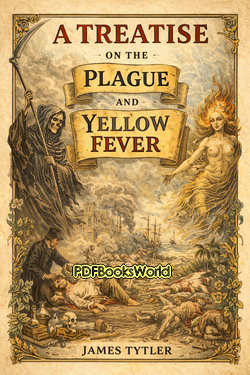
A Treatise on the Plague and Yellow Fever
by James Tytler
Early Medical Efforts to Understand Deadly Epidemics
A Treatise on the Plague and Yellow Fever by James Tytler is an early medical work that examines two of the most feared diseases in human history. Written during a period when scientific knowledge of infectious diseases was still developing, the book reflects the efforts of physicians and scholars to understand the causes, symptoms, spread, and treatment of devastating epidemics. Tytler sought to gather available knowledge and observations in order to explain illnesses that had repeatedly caused widespread suffering and social disruption.
Today, the work is best appreciated as a historical document that reveals how medical thinkers approached public health challenges before the emergence of modern germ theory, microbiology, and epidemiology.
The Historical Impact of Plague
For centuries, plague was among the most destructive diseases known to humanity. Outbreaks affected cities, disrupted economies, and altered the course of history. Communities often struggled to understand how the disease spread, leading to a variety of theories and preventive measures.
Tytler discusses plague as it was understood in his era, examining its symptoms, patterns, and effects on populations. His observations provide insight into historical medical thinking and public responses to epidemic disease.
Understanding Yellow Fever
Yellow fever posed a significant threat in many parts of the world, particularly in tropical and subtropical regions. Before modern medical discoveries identified its transmission through mosquitoes, physicians attempted to explain its spread using the knowledge available to them.
The treatise reflects these efforts, presenting contemporary ideas about the disease while documenting its effects on individuals and communities. Such discussions illustrate the challenges faced by medical practitioners working with limited scientific tools.
Major Themes Found Throughout the Book
- Medical Inquiry: The search for explanations of disease and epidemic outbreaks.
- Public Health: Efforts to protect communities from widespread illness.
- Observation: Using evidence and experience to understand disease.
- Historical Medicine: The evolution of medical knowledge over time.
These themes make the work valuable for readers interested in the history of science and healthcare.
Medicine Before Modern Germ Theory
One of the most interesting aspects of the treatise is its place in the history of medical knowledge. At the time of its writing, many fundamental discoveries about bacteria, viruses, and disease transmission had not yet been made. Physicians relied heavily on observation, personal experience, and prevailing theories to explain illness.
As a result, some conclusions found in the work differ significantly from modern scientific understanding. This contrast helps readers appreciate the progress made in medical research over subsequent centuries.
The Importance of Historical Medical Texts
Although modern medicine has greatly expanded our understanding of infectious diseases, historical medical works remain valuable. They reveal how earlier generations confronted health crises and attempted to protect their communities. Such texts also demonstrate the gradual process through which scientific knowledge develops and improves.
Tytler's treatise contributes to this historical record by preserving contemporary perspectives on two major epidemic diseases.
Why Readers Continue to Study the Book
- Historical Insight: A glimpse into medical thought before modern science.
- Epidemic History: Discussion of two significant infectious diseases.
- Scientific Development: Evidence of how medical understanding evolved.
- Cultural Context: Reflections of public health concerns of the period.
These qualities make the work useful for historians, researchers, and students of medicine.
Why A Treatise on the Plague and Yellow Fever Remains Worth Reading
A Treatise on the Plague and Yellow Fever stands as an important example of early medical scholarship. Through its examination of epidemic diseases that once inspired widespread fear, James Tytler documents humanity's efforts to understand and combat serious health threats. While modern science has replaced many of the book's medical explanations, its historical value remains considerable, offering readers a fascinating perspective on the development of medicine and public health.
Similar Genres
About the Author
James Tytler was a Scottish writer, editor, translator, inventor, and physician whose remarkably varied career reflected the intellectual curiosity of the eighteenth century. He contributed to scientific, medical, and literary fields while becoming one of the early contributors to the Encyclopædia Britannica. Explore James Tytler books to discover the author's life, literary career, and access notable works.