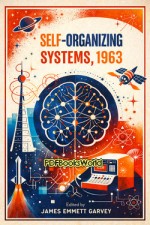
James Emmett Garvey
James Emmett Garvey was an American researcher, editor, and science writer whose work reflected the growing interest in emerging technologies during the mid-twentieth century. He contributed to the communication of complex scientific ideas at a time when fields such as cybernetics, automation, computer science, and systems theory were developing rapidly. Through his editorial and writing efforts, Garvey helped make advanced scientific discussions more accessible to students, researchers, and readers interested in technological progress. His work represents an important period when interdisciplinary research was reshaping the understanding of machines, information, and organized systems.
Interest in Scientific Progress
James Emmett Garvey was closely associated with scientific subjects that examined how complex systems behave, adapt, and solve problems. During the 1960s, researchers from many disciplines began working together to explore ideas that connected biology, engineering, mathematics, and computing. Garvey's contributions helped present these developing concepts to a wider audience, encouraging greater understanding of the scientific advances taking place during his time.
His work reflected a belief that scientific knowledge grows through collaboration and the exchange of ideas across different fields of study. This interdisciplinary approach became an important feature of modern scientific research.
Writing Style
Garvey wrote in a clear, organized, and informative style that made technical subjects easier to understand without sacrificing accuracy. He presented scientific concepts logically, explaining new developments in language that educated readers from different backgrounds could follow. His writing emphasized careful explanation rather than unnecessary complexity.
This balanced approach helped bridge the gap between specialized research and general scientific education. Readers could explore challenging ideas while gaining a broader understanding of the technologies shaping the modern world.
Contribution to Systems Research
James Emmett Garvey contributed to the growing body of literature that explored how complex systems organize, communicate, and adapt. His work reflected an era when scientists were examining connections between living organisms, machines, and information processing. These studies helped influence later developments in computing, artificial intelligence, robotics, and systems engineering.
By supporting the publication and discussion of these ideas, Garvey helped encourage scientific collaboration across traditional academic boundaries. His work illustrates how the exchange of knowledge can accelerate innovation and deepen understanding.
Influence on Scientific Literature
Garvey's publications remain valuable as historical records of an important stage in scientific development. They capture the excitement surrounding new research fields that would later become central to modern technology. Historians of science and technology continue to find value in works from this period because they reveal how researchers first approached ideas that now influence many areas of everyday life.
His contribution demonstrates the importance of editors and science communicators in helping complex research reach broader audiences and inspire future generations of scientists.
Lasting Legacy
James Emmett Garvey is remembered for his role in promoting scientific knowledge during a period of remarkable technological innovation. Through his writing and editorial work, he helped readers explore new ideas about systems, information, and emerging technologies with greater confidence and understanding. His publications continue to provide insight into the history of scientific thought and the evolution of interdisciplinary research. Today, his public domain works remain valuable resources for readers interested in the history of science, technology, and the development of modern systems theory.