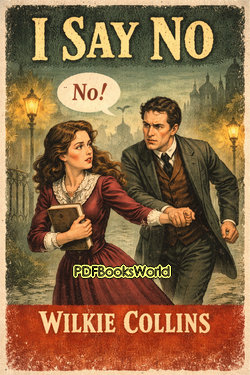
I Say No
by Wilkie Collins
Defiance, Mystery, and Emotional Resolve in a World of Deception
I Say No by Wilkie Collins is a suspenseful Victorian novel combining hidden identity, social injustice, emotional determination, and psychological intrigue. Filled with secrecy, mistaken assumptions, fragile loyalties, and moral conflict, the story follows characters struggling to preserve truth and personal integrity within a society shaped by prejudice and manipulation.
Collins creates a tense emotional atmosphere where refusal itself becomes an act of courage and independence.
A Young Woman Refuses Silence and Submission
The story centers on Emily Brown, a determined and emotionally resilient young woman whose life becomes entangled with mystery surrounding crime, inheritance, and concealed personal history.
As questions emerge involving a missing man, uncertain identity, and troubling past events, Emily repeatedly finds herself pressured by authority, social expectation, and emotional manipulation.
Rather than quietly accepting the explanations imposed upon her, she resists and insists upon discovering truth for herself.
Collins gradually unfolds a network of hidden relationships, false appearances, and moral corruption beneath respectable Victorian society.
The suspense grows through uncertainty surrounding both guilt and personal identity.
The Figures Within the Victorian Mystery
- Emily Brown: A strong-willed and compassionate young woman determined to defend truth and emotional honesty.
- The Missing or Mysterious Figures: Individuals connected to concealed histories, mistaken assumptions, and hidden motives.
- The Social Authorities and Manipulators: Characters attempting to control information, reputation, and emotional outcomes.
- The Loyal Friends and Investigators: Allies seeking clarity within confusion and deception.
The emotional strength of the central heroine gives the novel much of its energy and humanity.
The Courage to Resist Falsehood
One of the novel’s strongest ideas is that truth often requires moral courage, especially when social systems encourage silence, obedience, or convenient deception. Collins portrays refusal not as stubbornness alone, but as an assertion of personal conscience and emotional integrity.
Emily’s repeated resistance to manipulation reflects the novel’s broader concern with individual dignity and independence.
The narrative also questions how easily society judges individuals based on appearances, rumor, and incomplete information.
This moral uncertainty creates both suspense and emotional depth.
Major Themes Running Through the Novel
- Truth and Personal Integrity: Characters struggle to preserve honesty within a world shaped by deception and pressure.
- Hidden Identity and Secrecy: Concealed histories and mistaken assumptions drive the mystery forward.
- Female Independence and Emotional Strength: Emily resists manipulation and asserts moral autonomy.
- Social Judgment and Injustice: Victorian society proves vulnerable to prejudice and false conclusions.
Collins’s Mature Blend of Mystery and Social Criticism
I Say No demonstrates Wilkie Collins’s continued mastery of suspenseful storytelling combined with emotional realism and social commentary. The novel unfolds through gradual revelation, psychological tension, and carefully layered relationships.
Collins balances mystery with sympathy for emotionally vulnerable individuals confronting rigid social systems.
The pacing remains controlled and engaging as truth slowly emerges from confusion and concealment.
Why the Novel Still Feels Relevant
Modern readers continue finding I Say No compelling because its themes remain highly recognizable. Resistance against manipulation, the search for truth, emotional independence, and distrust of public judgment continue shaping modern psychological and mystery fiction.
The novel also offers a memorable portrait of moral courage exercised quietly but firmly.
For readers interested in Victorian suspense, socially conscious mysteries, emotionally resilient heroines, and psychologically rich narratives about truth and deception, this work remains thoughtful, engaging, and emotionally satisfying.
Similar Genres
About the Author

Wilkie Collins earned a lasting reputation as one of the pioneers of modern mystery and sensation fiction. Born in London in 1824, he developed a storytelling style that combined suspense, memorable characters, and carefully constructed plots, keeping readers engaged from beginning to end. Explore Wilkie Collins books to discover the author's life, literary career, and access notable works, including The Moonstone, The Woman in White, After Dark, Basil , and more.