
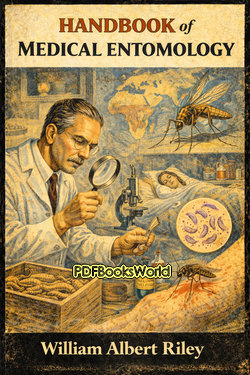
Handbook of Medical Entomology
by William Albert Riley
The Tiny Creatures That Changed the History of Medicine
Handbook of Medical Entomology by William Albert Riley explores the important relationship between insects and human health. The book focuses on insects and other small organisms that spread disease, affect sanitation, or create serious public health problems. Written during a period when scientists were making major discoveries about infectious disease, the work helped readers understand how tiny creatures could influence entire populations.
The book combines biology, medicine, and public health in a practical and educational way. Riley explains how insects became connected to illnesses such as malaria, yellow fever, and plague, transforming the scientific understanding of disease transmission.
Understanding Medical Entomology
Medical entomology is the study of insects and similar organisms that affect human health. Before scientists understood how diseases spread, many illnesses were blamed on poor air or mysterious environmental causes.
Research eventually revealed that mosquitoes, fleas, lice, and flies could carry harmful microorganisms from one host to another. This discovery changed public health and disease prevention around the world.
The Role of Insects in Disease Transmission
One of the book’s most important subjects is the way insects act as carriers of infection. Riley explains how specific insects became linked to particular diseases and why controlling insect populations became essential for protecting public health.
The work highlights the scientific breakthroughs that allowed doctors and researchers to better understand epidemics and reduce the spread of dangerous illnesses.
Main Topics Explored in the Book
- Mosquitoes and the spread of malaria and yellow fever
- Fleas and their connection to plague outbreaks
- Flies, lice, and sanitation-related diseases
- Methods used to control harmful insect populations
- The scientific study of disease transmission
These topics helped establish medical entomology as an important scientific field.
A Scientific Approach to Public Health
The book reflects the growing importance of scientific observation and laboratory research during the early twentieth century. Riley presents information carefully and systematically, helping readers understand the biological processes behind disease transmission.
This scientific approach played a major role in improving sanitation, healthcare practices, and disease prevention efforts in many countries.
The Historical Importance of the Work
Handbook of Medical Entomology captures a period when medical science was rapidly advancing. Discoveries about bacteria, parasites, and insect carriers changed how governments and healthcare systems responded to epidemics.
The book also shows how closely medicine became connected with environmental study and public sanitation. Controlling insects became an essential part of protecting communities from disease.
Why the Book Still Matters Today
Even in the modern world, insect-borne diseases continue to affect millions of people. Riley’s work remains historically important because it documents the scientific foundations of disease prevention and vector control.
For readers interested in medical history, biology, epidemiology, or public health, Handbook of Medical Entomology offers a fascinating look at how the study of insects became a critical part of modern medicine.
Similar Genres
About the Author
William Albert Riley was an American entomologist, educator, and author whose work made important contributions to the study of insects and their relationship to human health. As a professor and researcher, he devoted many years to teaching biology and entomology while encouraging scientific observation and careful investigation. Explore William Albert Riley books to discover the author's life, literary career, and access notable works.