Gustaf Lindstrom
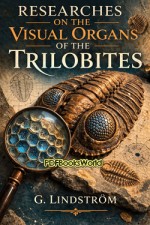
Gustaf Lindström was a Swedish paleontologist and geologist whose meticulous research greatly advanced the study of ancient marine life and fossil invertebrates. Best known for his investigations of Paleozoic fossils, he made significant contributions to the understanding of trilobites, corals, brachiopods, and other extinct organisms preserved in the geological record. His careful observations and detailed descriptions established him as one of the leading paleontologists of the nineteenth century. Researches on the Visual Organs of the Trilobites remains one of his most influential scientific works, providing an in-depth examination of the remarkable visual systems of these ancient arthropods.
A Pioneer in Paleontological Research
Gustaf Lindström devoted much of his scientific career to studying fossils from the Paleozoic Era, particularly those discovered on the Swedish island of Gotland. His research combined detailed anatomical analysis with geological investigation, allowing him to reconstruct the appearance and evolutionary relationships of long-extinct organisms. His careful documentation helped establish new standards for paleontological research during a period of rapid scientific discovery.
Lindström believed that fossil evidence offered valuable insight into the history of life on Earth. Through patient observation and precise illustration, he revealed features that had previously gone unnoticed, expanding scientific understanding of ancient ecosystems.
Investigating the Eyes of Ancient Creatures
One of Lindström's most remarkable achievements was his study of trilobite vision. In Researches on the Visual Organs of the Trilobites, he examined the structure of fossilized eyes with exceptional detail, demonstrating that these extinct marine animals possessed highly sophisticated visual organs. His research explored the arrangement of lenses, eye anatomy, and evolutionary adaptations, helping scientists better understand how trilobites interacted with their environment hundreds of millions of years ago.
His work combined paleontology, comparative anatomy, and microscopy, illustrating how multiple scientific disciplines could be brought together to answer questions about prehistoric life. Many of his observations remained valuable references for later researchers investigating the evolution of vision.
His Contribution to Paleontology
Gustaf Lindström made lasting contributions to the study of fossil organisms through his rigorous methods and careful attention to anatomical detail. His publications enriched scientific knowledge of Paleozoic marine ecosystems and provided important evidence for understanding the evolution of early animal life. His research on trilobites, in particular, helped demonstrate the remarkable complexity of organisms that lived long before the appearance of modern vertebrates.
His work also emphasized the importance of combining field observations with laboratory analysis. This balanced approach influenced future generations of paleontologists and strengthened the scientific study of fossils as a discipline grounded in careful evidence.
An Enduring Legacy
Gustaf Lindström is remembered as one of the foremost paleontologists of his era. His detailed studies continue to be valued by researchers investigating fossil anatomy, evolutionary biology, and the history of marine life. Although scientific techniques have advanced considerably since his lifetime, many of his observations remain accurate and historically significant.
Researches on the Visual Organs of the Trilobites stands as a landmark in the study of ancient life, demonstrating Gustaf Lindström's exceptional skill as a scientist and observer. PDF Books World carefully curates editions of his classic works, allowing modern readers to explore pioneering research that deepens our understanding of evolution, fossil organisms, and the extraordinary history of life on Earth.