Gilbert Thomas Stephenson
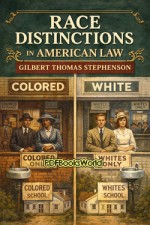
Gilbert Thomas Stephenson was an American lawyer, legal scholar, historian, and author whose writings examined the relationship between law, public policy, and race in the United States during the early twentieth century. Through careful legal research and historical analysis, Stephenson documented how legislation and court decisions shaped the lives of Americans across different regions of the country. His works remain valuable historical resources because they preserve an understanding of legal systems and social conditions during a transformative period in American history. His book Race Distinctions in American Law is one of his best-known studies, offering a detailed examination of how race was addressed within the legal framework of the United States.
A Scholar of Law and Public Policy
Gilbert Thomas Stephenson devoted much of his academic career to studying constitutional law, civil rights legislation, and the development of American legal institutions. Rather than focusing solely on legal theory, he examined how laws affected everyday life and reflected broader political and social developments. His research emphasized careful documentation, drawing upon statutes, judicial opinions, and government records to explain how legal systems evolved over time. This methodical approach made his writings valuable not only to legal professionals but also to historians, educators, and students interested in American public policy.
Stephenson wrote during an era marked by significant debate over citizenship, voting rights, segregation, and the role of government in regulating social relationships. By recording the legal structures of his time, he created works that continue to help scholars understand the historical context in which these issues developed. Although many of the laws discussed in his writings have since been changed or overturned, his books remain important historical documents for studying the evolution of American law.
Examining Law Through Historical Evidence
In Race Distinctions in American Law, Stephenson surveys state and federal laws concerning racial classifications and legal rights as they existed during the early twentieth century. The book presents legal materials in an organized manner, allowing readers to understand the structure and operation of the law during that period. Today, the work is primarily valued as a historical reference, offering insight into legal systems that later became the subject of significant constitutional reforms and civil rights movements. It serves as an important reminder of how legal institutions evolve over time in response to changing social values and democratic principles.
Notable Works
- Race Distinctions in American Law – A historical study examining racial classifications and legislation in the American legal system.
- The Separation of the Races in Public Conveyances – An analysis of laws governing racial segregation in public transportation.
- The Political History of North Carolina – A study exploring the political development and governmental institutions of North Carolina.
- History of American Election Laws – Examines the evolution of election legislation and voting practices in the United States.
An Enduring Legacy
Gilbert Thomas Stephenson is remembered as a careful legal historian whose works preserve an important record of American law during a period of significant political and social change. His commitment to documenting statutes, judicial decisions, and legal institutions has made his writings valuable resources for historians, legal scholars, and students seeking to understand the historical development of civil rights and constitutional law. While many of the legal principles discussed in his works have since been superseded by later legislation and court decisions, his research continues to provide meaningful historical context for the study of American legal history. Visitors to PDF Books World can explore Stephenson's public domain writings to gain insight into the evolution of law, public policy, and the changing pursuit of justice in the United States.